
Lawn
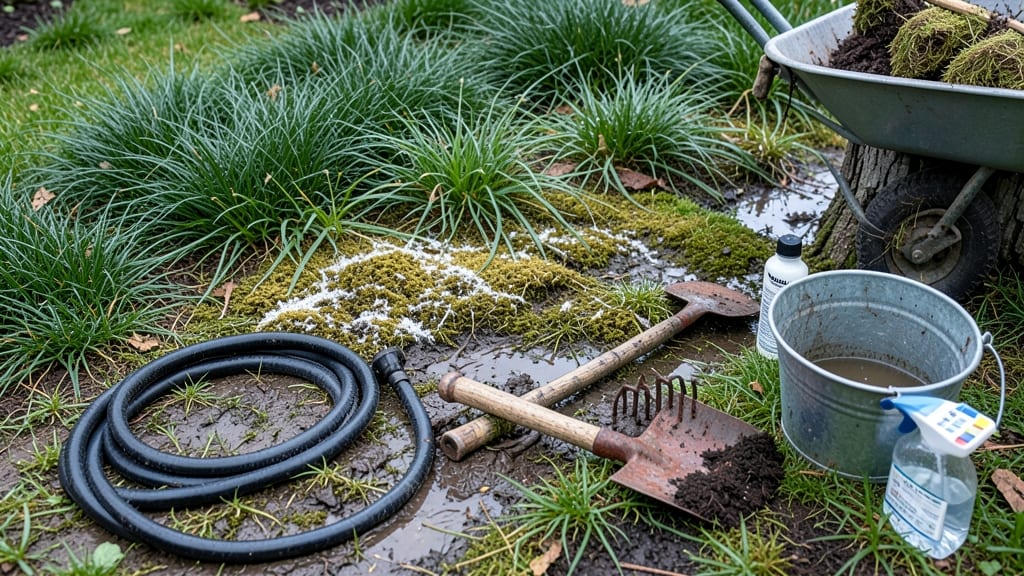
Your soggy lawn isn’t a lost cause—how to fix an overwatered lawn can revive roots in as little as 2 weeks. 🌱 I’ve drowned more lawns than I’d like to admit, but the key isn’t just cutting back on water—it’s giving roots room to breathe.
The moment you see that dark, spongy soil and yellowing patches, you’re already on the clock. Start by stopping watering entirely for 3-5 days to let the soil dry out. Then, use a garden fork to poke holes every 6 inches—this helps water drain instead of pooling.
For stubborn spots, top with a 2-inch layer of coarse sand or small gravel to break up compaction. Within days, you’ll notice grass turning a healthier green as roots access oxygen again. The real win? A lawn that stays resilient through summer heat and winter freezes.
Prevention is simple: check soil moisture before watering—if it’s damp 1 inch down, skip it. This works for any grass type, from Kentucky bluegrass to fescue. Stick with it, and your lawn will bounce back stronger than ever.
📚 In This Guide
- What you need
- Instructions
- Tips and common mistakes
- Wrapping up and next steps
What you need
- ● Garden hose (or sprinkler system) – For adjusting water flow post-fix.
- ● Shovel or spade – A sturdy flat-edged one (18–24" wide) for digging drainage trenches.
- ● Rake (bow or leaf rake) – To level soil and remove debris (12–18" teeth work best).
- ● Sand or gravel – Coarse, drainage-grade (1/4"–1/2" particles), ~5–10 lbs per 10 sq ft of lawn.
- ○ Perforated drain pipe (optional but helpful) – 4" diameter, 10–20 ft length (depends on lawn size).
- ● Compost or topsoil – 1–2 bags (for amending compacted soil).
- ● Lawn aerator (manual or rented) – Spike or core type to loosen soil (if severely compacted).
- ● Waterproof gloves & knee pads – Because nobody enjoys muddy hands or sore knees! 😅
- ● French drain kit – Pre-made corrugated pipe + gravel for DIY trenches.
- ● Soil moisture meter – To monitor drainage progress (avoid re-flooding!).
- ● Lawn de-thatcher – If thatch buildup is blocking water flow.
- ● Rain barrel or diverter – To redirect excess water away from problem areas.
Step-by-Step instructions for reviving an overwatered lawn
Here’s how to get your lawn back on track—fast—without digging up the whole yard.
💧 Step 1: Stop Watering and Let the Soil Dry Out
Turn off the sprinklers immediately. Overwatered grass needs time to recover, and adding more water just delays the process. If your lawn feels soggy when you press your foot down, it’s still too wet. Wait until the top 2-3 inches of soil feel dry to the touch—this could take 3-7 days depending on your climate.
Here’s the thing—you’ll notice yellow patches or spongy spots where water pools. These areas need extra attention later, but for now, let nature do its work. Avoid walking on the lawn until the soil firms up; you don’t want to compact it further.
✂️ Step 2: Aerate Compacted Areas to Improve Drainage
Rent a core aerator or use a manual garden fork to poke holes 3-4 inches deep across the lawn. Focus on low spots where water collects. The goal is to break up compacted soil so air and water can move freely. If you don’t have an aerator, a shovel or even a long screwdriver will work in a pinch—just space the holes 6 inches apart.
You’ll see soil plugs pop out as you work. Don’t toss them—they’re full of beneficial microbes. Sprinkle them back over the holes to help rebuild soil structure. This step is critical for fast recovery, especially if your lawn has heavy clay soil that drains poorly.
☀️ Step 3: Mow High to Protect Grass and Encourage Recovery
Set your mower to its highest setting—3-4 inches—and trim the lawn. Longer grass shades the soil, reducing evaporation and protecting tender roots from sunburn. Overwatered grass is weak, so cutting it short would stress it even more. You’ll notice the blades look limp at first, but they’ll perk up as the soil dries.
Bag the clippings if they’re thick or discolored—healthy clippings can be left on the lawn, but overwatered grass may produce more debris than usual. This is your chance to give the roots a break while the surface recovers.
🪴 Step 4: Apply a Light Layer of Sand or Compost
Spread a ¼-inch layer of coarse sand or compost over the lawn to improve drainage and add organic matter. Focus on low spots where water pools. Rake it lightly so it blends into the soil without smothering the grass. This helps break up compacted areas and encourages roots to grow deeper.
Don’t use fine sand or clay-based soil amendments—they’ll compact and make drainage worse. A mix of sand and compost works best. Water lightly after applying to help it settle, but avoid soaking the lawn again.
🌱 Step 5: Water Deeply and Infrequently to Rebuild Roots
Once the soil is dry, water deeply—1-1.5 inches—once a week instead of daily. Use a rain gauge or tuna can to measure. Deep watering encourages roots to grow downward, making the lawn more drought-resistant. You’ll see the grass green up within 10-14 days if the roots are still alive.
If your lawn has large dead patches, those areas may need reseeding or sod. But for now, focus on the healthy parts. Overwatering weakens grass, so this gradual approach gives it the best chance to bounce back.
Tips & tricks for reviving an overwatered lawn
A few quick tricks that'll make all the difference in getting your lawn back to healthy in record time.
The Waiting Game: Those 3-7 days of waiting for the soil to dry out might feel like forever, but trust me on this—it's non-negotiable. I learned this the hard way after trying to jump ahead and watering again too soon. The key is to check with your finger: push it 2-3 inches deep. If it comes out clean and dry, you're ready for the next steps. If it's still damp, give it another day or two. Patience here prevents setting back your progress.
Aeration Hack: When you're poking those 3-4 inch holes in Step 2, don't just focus on the obvious low spots. Walk the entire lawn in an "X" pattern to catch hidden compacted areas. I've seen lawns that looked fine on the surface but had hidden drainage issues revealed by this thorough approach. And if you don't have an aerator, a garden fork works just as well—just make sure those holes are spaced 6 inches apart for proper airflow.
Mowing Wisdom: That 3-4 inch height setting in Step 3 isn't just about protecting the grass—it's about creating shade. Longer grass blades act like tiny umbrellas, reducing evaporation from the soil below. I've noticed that lawns mowed this way recover their color faster because the roots stay cooler and more hydrated. Plus, you'll be amazed at how much less you'll need to water once you make this switch.
Sand vs. Compost: For that ¼-inch layer in Step 4, I recommend mixing equal parts coarse sand and compost. The sand improves drainage instantly while the compost provides nutrients for recovery. Apply it to the entire lawn—not just the low spots—because even healthy-looking areas benefit from this boost. Just be gentle with the raking so you don't disturb the grass roots too much.
Pro Tips for Fix Overwatered Lawn
- A few quick tricks that'll make all the difference in getting your lawn back to healthy in record time.
- The Waiting Game: Those 3-7 days of waiting for the soil to dry out might feel like forever, but trust me on this—it's non-negotiable.
- Aeration Hack: When you're poking those 3-4 inch holes in Step 2, don't just focus on the obvious low spots.
Frequently asked questions
Got questions about fixing an overwatered lawn? You’re not alone—here are some common concerns and quick fixes to get your grass back on track!
How long does it take for an overwatered lawn to recover?
Recovery time varies, but with proper drainage fixes (like aeration or sand topdressing), you’ll see improvement in 1–2 weeks. If roots are severely damaged, it may take 4–6 weeks for full revival. Monitor soil moisture and avoid rewatering until the top 2–3 inches of soil feel dry.
Can I fix an overwatered lawn without aerating?
Yes! If aeration isn’t an option, try these alternatives:
- Sand topdressing: Spread ¼-inch of coarse sand to improve drainage.
- Adjust watering: Switch to deep, infrequent watering (1–1.5 inches per week).
- Drainage channels: Dig shallow trenches (6–8 inches deep) to redirect excess water.
What’s the best time of day to water after fixing drainage?
Water your lawn early morning (4–8 AM) to minimize evaporation and fungal risks. Avoid evening watering, as damp grass overnight can promote disease. If you must water later, aim for before 6 PM and ensure soil has time to dry slightly.
Why does my lawn still look brown after fixing drainage?
Brown patches may persist due to root stress, fungal infections, or compacted soil. Test soil pH (ideal: 6.0–7.0) and fertilize lightly with a high-nitrogen blend. If brown spots spread, treat with a fungicide. Over time, healthy roots will regrow—patience is key!
Should I overseed an overwatered lawn immediately?
Wait until new roots are established (2–4 weeks) before overseeding. Overwatered soil can smother seeds. Instead, focus on drainage first, then overseed in early fall or spring when temperatures are mild. Use a starter fertilizer to boost germination.
Wrapping up and next steps
Fixing an overwatered lawn is totally doable—you’ve got this! 🌱 By improving drainage, aerating the soil, and adjusting your watering habits, you’ll give your grass the strong roots it deserves. Start small, stay consistent, and soon your lawn will bounce back with vibrant, healthy growth.
Ready to see real results? Take action today:
- Test your soil’s drainage this weekend.
- Pick one method (like sand top-dressing or French drains) to tackle first.
- Share your progress—your lawn (and future neighbors) will thank you!