
Watering
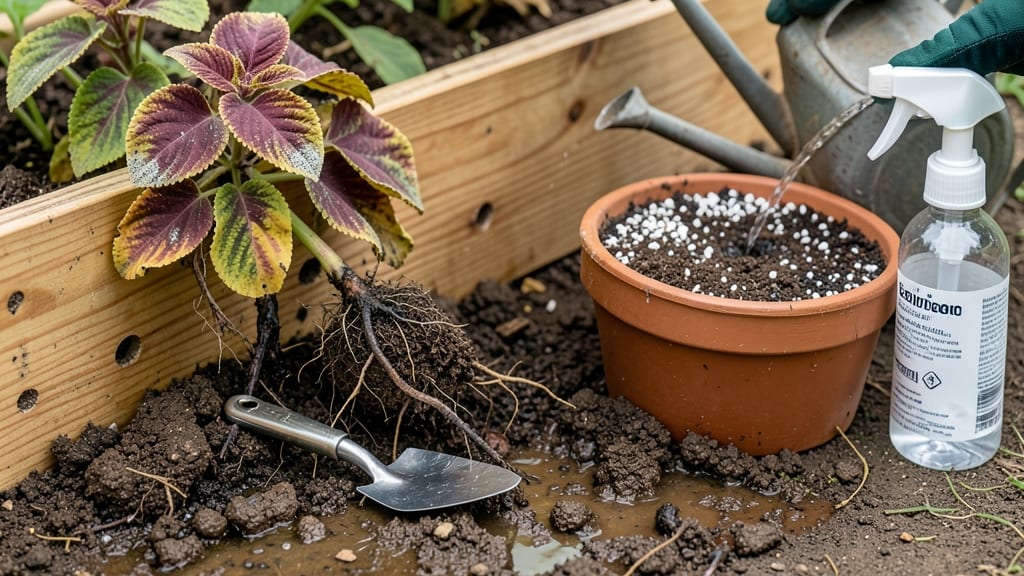
Your soggy soil is suffocating roots right now—but here’s how to fix overwatered outdoor plants before the damage becomes permanent. I’ve pulled plants back from the brink after weeks of too-much water—here’s how to stop the rot and revive them before it’s too late.
The key? Acting fast to drain excess moisture while giving roots a fighting chance to recover.
Start by halting watering completely and checking drainage—if water pools after 30 minutes, your soil needs sand or perlite to loosen it up. Trim any mushy, black stems (they’re rotten) and replant affected plants in fresh, well-draining mix. Most plants bounce back in 2-4 weeks if you catch it early.
Long-term, adjust your watering routine: stick your finger 1-2 inches deep before adding more. Mulch helps too—it slows evaporation and keeps soil evenly moist without drowning roots. Your plants will thank you with vibrant new growth in no time.
Confession: I’ve lost entire beds to overwatering, but now I treat soil like a sponge—never soggy, always breathable. The fix isn’t complicated, just consistent. Let’s bring your plants back to life!
📚 In This Guide
- What you need
- Instructions
- Tips and common mistakes
- Wrapping up and next steps
What you need
- ● Well-draining potting mix – Aim for a high-quality blend with perlite, vermiculite, or sand (e.g., Miracle-Gro Potting Mix or FoxFarm Ocean Forest). Quantity: Enough to refill the root zone (typically 1–2 gallons per plant).
- ● Gloves – A sturdy pair (e.g., garden or rubber gloves) to protect your hands from wet soil and potential pathogens.
- ● Trowel or small shovel – A 5–6 inch garden trowel for gently loosening soil and roots.
- ● Bucket or large container – A 5-gallon bucket (or larger) for holding excess water or mixing amendments.
- ● Pruning shears – Bypass pruners (sharp and clean) to trim severely damaged foliage or roots.
- ● Hose with adjustable nozzle – For gentle watering (avoid high pressure to prevent further stress).
- ○ Mulch (optional but helpful) – Organic mulch like shredded bark or straw to retain moisture and regulate soil temperature.
- ● Root stimulator – Products like Rootone or Seaweed Extract to encourage healthy regrowth.
- ● Fungicide (if needed) – A copper-based or neem oil spray to prevent root rot if mold or fungus is present.
- ● Soil moisture meter – Helps monitor water levels post-rescue (e.g., Xiaomi Soil Moisture Sensor).
- ● Plant support (e.g., stakes or cages) – Useful if your plant was weakened by overwatering and needs stability.
Step-by-Step rescue for overwatered outdoor plants
Here's how I revive plants struggling from soggy soil—no guesswork, just proven techniques.
Stop Watering and Assess Root Health Immediately
First, halt all watering completely. Overwatered plants can't recover if you keep adding moisture to their already saturated roots. Check the soil 2-3 inches down—if it feels cold, compact, or smells like rot, the problem is severe. Gently pull back mulch or topsoil to inspect roots: healthy roots are firm and white, while mushy, dark, or foul-smelling roots need urgent attention.
If you see yellowing leaves or wilting despite damp soil, that's a clear sign of root suffocation. Don’t wait—act now. The longer roots sit in anaerobic conditions, the less chance they have to bounce back. I often use a small trowel to gently loosen the top 1-2 inches of soil around the base, letting excess moisture drain away before moving to the next step.
Improve Drainage and Aerate the Soil
Dig a 6-inch deep trench around the plant’s perimeter, about 3-4 inches away from the stem, using a garden fork or trowel. This creates space for air and excess water to escape. If your soil is heavy clay or compacted, mix in 1-2 inches of coarse sand or perlite into the trench to break up density. Avoid garden soil—it’ll just reintroduce the problem.
For container plants, lift them out and inspect the drainage holes. If they’re clogged with soil or debris, clear them immediately. Repot into a container with at least 1 inch of fresh potting mix amended with 20% perlite or orchid bark to improve aeration. If the plant is too large to repot, create a raised soil mound around the base to encourage root growth upward, away from saturated zones.
Adjust Watering and Monitor Recovery Closely
Resume watering only when the top 3-4 inches of soil feel dry to the touch, which could take 3-5 days depending on your climate. Water deeply but infrequently—aim for 1-2 gallons per plant at each session, letting it soak in slowly. Avoid overhead watering; instead, use a soaker hose or drip irrigation at the base to prevent foliage from staying damp, which invites fungal diseases.
Watch for new growth as your signal of recovery. Healthy leaves should perk up within 5-7 days, and you’ll notice fresh foliage emerging from the center. If the plant still looks weak after 10 days, trim any blackened or mushy stems with sterilized pruners to redirect energy to new growth. Mulch lightly with 1-2 inches of straw or shredded bark to retain moisture without suffocating roots—just keep it 3-4 inches away from the stem.
Tips & tricks for reviving overwatered outdoor plants
Here's what I've learned from years of saving soggy-rooted plants—these tricks make all the difference between recovery and loss.
Root Inspection Technique: When checking roots in Step 1, focus on the color and texture rather than just smell. Healthy roots should snap cleanly when bent, while compromised roots will break easily and release a foul odor. I use a small hand trowel to gently lift roots—this minimizes damage while giving you a clear view of the root zone's condition. Remember, the top 1-2 inches of soil often hides the most critical clues about root health.
Drainage System Upgrade: For Step 2, consider adding a 4-inch layer of gravel or broken pottery shards at the bottom of your trench if your soil is particularly dense. This creates a natural drainage layer that won't compact over time. For container plants, I've found that adding 20% more perlite than the recommended 20% (so 40% total) provides even better aeration without compromising moisture retention.
Watering Schedule Strategy: The 3-5 day waiting period before resuming watering in Step 3 can feel agonizing, but it's crucial. I recommend setting a calendar reminder for the 3rd day to check soil moisture—this prevents both underwatering and the temptation to water too soon. If you're in a particularly humid climate, you might need to extend this to 5-7 days to ensure complete drying.
Recovery Monitoring: The 5-7 day window for initial recovery signs is your best indicator. I look for three key visual cues: new leaf growth at the center, slightly darker green color on older leaves, and a firmer stem when gently squeezed. If you don't see these signs by 10 days, it's time to make more aggressive cuts—literally. Removing blackened stems redirects the plant's energy to healthier growth, which is often the final push needed for revival.
Pro Tips for Fix Overwatered Outdoor Plants
- Here's what I've learned from years of saving soggy-rooted plants—these tricks make all the difference between recovery and loss.
- Root Inspection Technique: When checking roots in Step 1, focus on the color and texture rather than just smell.
- Drainage System Upgrade: For Step 2, consider adding a 4-inch layer of gravel or broken pottery shards at the bottom of your trench if your soil is particularly dense.
Frequently asked questions
Got questions about reviving your soggy outdoor plants? You’re not alone—overwatering is a common struggle! Here are answers to the most pressing concerns to help you get back on track.
How do I know if my plant is overwatered vs. underwatered?
Check the soil first: Overwatered plants often have mushy, discolored stems and yellowing leaves that feel soft or limp. The soil may smell sour or have mold. Underwatered plants, on the other hand, have crispy, brown edges and dry, cracked soil. Stick your finger 1-2 inches deep—if it’s damp, you’re likely overdoing it!
How long does it take for overwatered plants to recover?
Recovery time varies! Mild cases may bounce back in 3-7 days with proper care, while severely damaged plants (like root rot) could take weeks or months—or may not recover at all. Be patient, but act fast: drain excess water and improve drainage immediately to stop further damage.
Can I use coffee grounds or other household items to fix overwatered plants?
Coffee grounds can actually help in moderation—they’re slightly acidic and add organic matter, but they won’t fix overwatering alone. For a quick fix, focus on draining soil and adjusting watering habits. Avoid salt, sugar, or vinegar; these can harm roots further. Stick to proven methods like perlite or sand for drainage improvements.
Will pruning yellow leaves help an overwatered plant?
Yes! Pruning only the most damaged leaves (not healthy ones) helps the plant redirect energy to recovery. Use sterilized scissors to cut just above a leaf node. Avoid heavy pruning—focus on removing mushy, black, or brown leaves first. This reduces stress and prevents fungal spread.
What if my plant’s roots are rotting—can I save it?
Root rot is serious, but act fast: Remove the plant from the soil, trim black, mushy roots with clean shears, and repot in fresh, well-draining mix. If >50% of roots are healthy, it may recover. For stubborn cases, consider propagating from healthy stems or starting over. Prevention? Water only when the top 1-2 inches of soil are dry!
Wrapping up and next steps
Reviving overwatered outdoor plants is totally doable—you’ve got this! 🌱 By adjusting your watering routine, improving drainage, and giving your plants some breathing room, you’ll help them bounce back stronger than ever. Start by monitoring soil moisture and trimming damaged foliage to encourage new growth.
Ready to see your garden thrive again? Take action today:
- Check your plants weekly for signs of recovery.
- Adjust your watering schedule based on what you’ve learned.
- Celebrate small wins—your green thumb is growing!