
How To
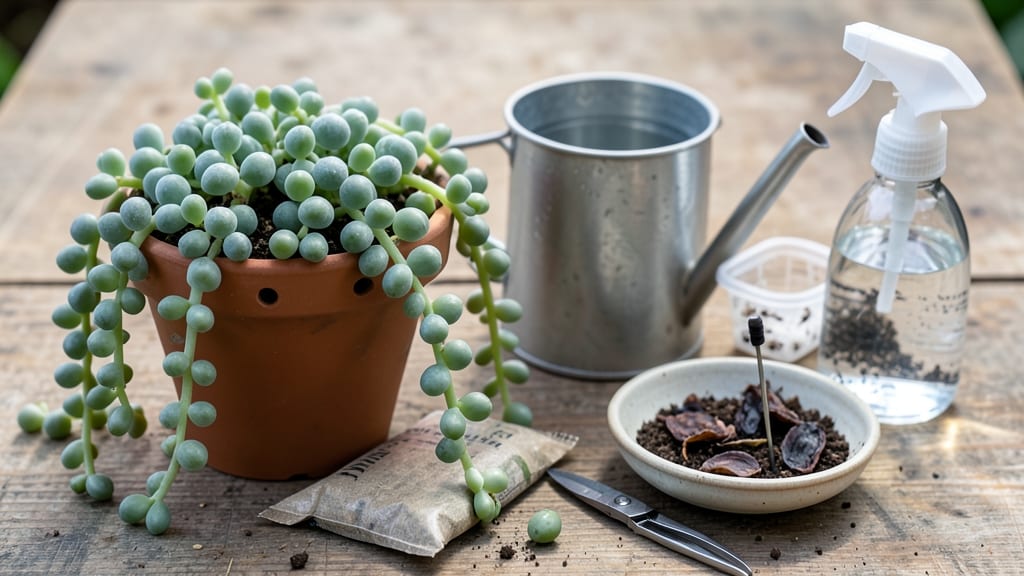
Your how to fix overwatered String of Pearls is begging for help—those plump stems and tiny leaves can’t survive soggy soil. 💚 Honestly, I’ve drowned more of these than I’d like to admit, but here’s the good news: recovery is possible with just three focused steps.
The key is acting fast before rot spreads.
First, stop watering entirely and let the soil dry out completely. You’ll know it’s ready when the top inch feels like a dry sponge. Trim any mushy stems at the base with clean scissors—healthy tissue stays firm, while rotten parts squish like overripe fruit.
This might seem harsh, but it’s the only way to stop the spread.
Once you’ve cut back the damage, repot in fresh, gritty soil mix (cactus/succulent mix works perfectly). These plants need to breathe, so add perlite or pumice to improve drainage.
Water sparingly—just enough to moisten the soil—then wait until the top inch is bone dry before watering again. Within weeks, you’ll see new growth pushing through.
Long-term, keep your String of Pearls in bright, indirect light and water only when the soil is completely dry. A well-draining pot with drainage holes is non-negotiable. With this care, your plant will bounce back stronger than ever—promise. Here’s to second chances in the garden!
Root Causes Of Overwatering
Overwatering your String of Pearls (Senecio rowleyanus) isn’t just a mistake—it’s often the result of well-intentioned but misinformed care. Understanding why this happens helps you avoid repeating it. Let’s break down the science and habits that lead to soggy soil and struggling plants.
🌱 The Problem: String of Pearls thrives in well-draining soil and pots—yet many gardeners unknowingly trap excess moisture. If your container lacks drainage holes or uses heavy, water-retentive soil (like standard potting mix), water pools at the roots instead of draining away.
Why It Matters:
- Root Rot Fungus (Pythium or Phytophthora) thrives in waterlogged conditions, suffocating roots and cutting off nutrient uptake.
- Oxygen Deprivation: Roots need air pockets in soil to respire. Compacted or waterlogged soil forces them to "drown," leading to yellowing leaves and mushy stems.
- Salt Buildup: Over time, minerals in tap water accumulate in soggy soil, creating a toxic environment for delicate Senecio roots.
💡 Pro Tip: Always use a cactus/succulent mix (60% mineral grit, 30% potting soil, 10% perlite) and terracotta or ceramic pots with drainage holes. If repotting, add a 2-inch layer of pebbles at the bottom for extra airflow.
💦 The Problem: String of Pearls are drought-tolerant—they store water in their plump, pearl-like leaves. Yet many people water on a fixed schedule (e.g., every Tuesday) without checking soil moisture, leading to cycles of over- then underwatering.
Why It Matters:
- Overwatering Triggers: Even if you stop watering after a few days, the damage starts within 24–48 hours of excess moisture. Roots begin to suffocate, and the plant’s transpiration (water loss through leaves) slows dramatically.
- False Signals: Wilting can actually mean underwatering or overwatering—but if the soil is soggy, it’s the latter. Always stick your finger 2 inches deep before watering.
- Seasonal Shifts: In winter, String of Pearls enter dormancy and need far less water (every 3–4 weeks). Ignoring this leads to rot.
🌡️ Quick Test: The "squeeze test"—gently press a leaf. If it’s firm and bounces back, it’s hydrated. If it’s soft or stays dented, the plant is either over- or underwatered (check soil first).
🌡️ The Problem: String of Pearls hate humidity—they’re native to arid South African deserts where air is dry and evaporation is rapid. Placing them in high-humidity environments (like bathrooms or kitchens) or near cold drafts (e.g., AC vents) disrupts their natural balance.
Why It Matters:
- Slow Evaporation = Wet Soil Longer: High humidity reduces transpiration, meaning the plant can’t "sweat out" excess water. Soil stays damp for days, promoting rot.
- Temperature Shock: Cold roots (below 50°F/10°C) stop absorbing water efficiently, leading to waterlogging. Meanwhile, warm air speeds up microbial activity, accelerating rot.
- Condensation Trap: If your plant sits on a cold windowsill, condensation drips back into the soil, mimicking a "watering" cycle without your input.
✨ Fix It: Keep your String of Pearls in bright, indirect light (east or west windows) with low humidity (below 40%). Use a dehumidifier if needed, and avoid placing them near heaters or AC units.
🚰 The Problem: Not all water is created equal. Tap water, distilled water, and even "soft" water can contribute to overwatering issues if they alter soil chemistry or salinity.
Why It Matters:
- Chlorine & Fluoride: These chemicals in tap water can disrupt soil microbes that help break down excess moisture, indirectly causing rot.
- Mineral Buildup: Over time, minerals like calcium and sodium accumulate in the soil, raising salinity. High salinity blocks water uptake, so the plant "drinks" less—but the soil stays wet longer.
- Distilled Water Shock: Pure distilled water has no nutrients or microbes, which can strip soil of beneficial bacteria that help with drainage.
💡 Solution: Use filtered or rainwater at room temperature. If using tap water, let it sit out for 24 hours to off-gas chlorine. Flush the soil every 6 months with plain water to prevent salt buildup.
🏺 The Problem: A pot that’s too large for your String of Pearls holds more water than the roots can use, leading to prolonged sogginess. Similarly, compacted or aged soil loses its ability to drain efficiently.
Why It Matters:
- Water Logging: A 6-inch pot for a small String of Pearls means weeks before the roots reach the edges—and by then, the center soil is a rot-friendly swamp.
- Soil Breakdown: Over time, potting mix compresses, reducing air pockets. Old soil also loses structure, making it harder for excess water to drain.
- Root Bound Stress: If roots are crowded, they can’t explore for moisture efficiently, so the plant "panics" and drinks more—leading to a vicious cycle.
🔥 Fix: Use pots only 1–2 inches larger than the root ball. Refresh soil every 1–2 years with a new cactus mix, and avoid pressing down when repotting.
Revive Your String of Pearls Now
If your Senecio rowleyanus (String of Pearls) is looking sad—think droopy stems, yellowing leaves, or mushy roots—don’t panic! Overwatering is often reversible with the right steps. Below, we’ve mapped out practical fixes based on the root cause, plus tips to keep your plant thriving long-term.
Let’s get those pearls perking up again! 🌱✨
If your plant’s roots smell foul, feel squishy, or ooze when touched, root rot has set in. Act fast to save it!
🔥 Step 1: Remove the Plant Gently
- 👩🌾 Carefully pull the plant from its pot (if soil is stuck, use a spoon to loosen it).
- 🧼 Rinse roots under lukewarm water to wash away excess soil and inspect for damage.
- Healthy roots are firm and white; rotten roots are brown, mushy, or black.
Trim the bad ones with sterilized scissors (dip in rubbing alcohol first).
🍳 Step 2: Disinfect & Dry
- 💦 Soak roots in a 1:10 hydrogen peroxide-water mix (3% strength) for 10 minutes to kill fungi/bacteria. Skip this if roots are already very damaged.
- 🌬️ Pat dry with paper towels, then let them air-dry for 24–48 hours in a shaded spot.
No direct sunlight yet!
🌱 Step 3: Repot in Fresh, Fast-Draining Soil
- Use a smaller pot (1–2 inches wider than the root ball) with succulent/cactus mix + perlite/pumice (50/50 ratio).
- Pro Tip: Add a thin layer of charcoal at the bottom to prevent future rot. 💡
- Water lightly only after 3–5 days—let the roots heal first!
If roots look healthy but soil stays soggy, your plant is drowning in moisture. Here’s how to correct it:
🔪 Step 1: Improve Drainage Immediately
- 🪴 Repot ASAP into a pot with drainage holes (terracotta is ideal).
- 🪨 Mix in coarse sand, perlite, or orchid bark (20–30%) to break up compacted soil.
- 🌡️ Let soil dry completely between waterings—stick your finger in 1–2 inches deep.
If dry, water; if damp, wait.
👨🍳 Step 2: Adjust Your Watering Routine
- 💧 Water only when soil is bone-dry (usually every 2–3 weeks in warm climates, longer in winter).
- 🚰 Use the “soak-and-dry” method: Water thoroughly until it drains from the bottom, then empty the saucer.
Never let it sit in water! - 🌧️ Rainy season? Move your plant to a covered porch or indoors to avoid excess humidity.
Once your String of Pearls is back on track, keep these habits to avoid repeat mistakes:
💡 Choose the Right Pot & Soil
- Pot: Terracotta or ceramic with multiple drainage holes (plastic traps moisture).
- Soil: Succulent mix + perlite/pumice (never regular potting soil—it holds too much water).
- 🌡️ Temperature Tip: Keep in 65–80°F (18–27°C)—warmer temps = faster drying soil.
🎯 Watering Wisdom
- 📅 Seasonal Adjustments:
- Fall/Winter: Water every 4–6 weeks (growth slows = less water needed).
- Never water on a
🌿 Light & Location Love
- ☀️ Bright, indirect light (east or west window). No direct midday sun—it can scorch leaves.
- 🏡 Indoor vs. Outdoor:
- Outdoors (warm climates): Acclimate slowly to avoid sunburn; bring inside if temps drop below 50°F (10°C).
With these fixes, your String of Pearls should bounce back in 2–4 weeks. Stay patient—succulents are resilient, and once you nail the watering routine, you’ll have a trailing, pearl-covered masterpiece** in no time! 🎉
Frequently asked questions
How can I tell if my String of Pearls is overwatered vs. underwatered?
Check the soil first—if it's still damp 2 inches deep, it's overwatered. Look for mushy stems (press them: healthy ones stay firm) and yellowing leaves. Underwatered plants have wrinkled, shriveled leaves that bounce back when pressed, and soil that's completely dry. Pro tip: The "squeeze test" works for both—gently press a leaf.
Can I save my String of Pearls if the stems are completely mushy?
Yes, but act fast! Cut back all mushy stems at the base with clean scissors, then repot the healthy portions in fresh, fast-draining soil (cactus mix + perlite). Let the soil dry completely before watering again. New growth should appear within 2-4 weeks if the roots are still healthy.
Why does my String of Pearls keep getting overwatered even after fixing it?
Three common reasons: 1) Using regular potting soil (too dense), 2) Watering on a schedule instead of checking soil moisture, or 3) A pot without drainage holes. Switch to terracotta pots, a succulent-specific mix, and only water when the top 2 inches are completely dry.
Is it better to underwater than overwater my String of Pearls?
While both are bad, underwatering is less damaging—these plants store water in their leaves. Overwatering causes root rot, which spreads quickly and can kill the plant. The key is consistency: Let soil dry completely between waterings, then give it a thorough soak.
How long should I wait before watering again after fixing an overwatered plant?
Wait until the soil is bone dry—stick your finger 1-2 inches deep. For severely overwatered plants, this could take 3-4 weeks in warm conditions. In winter, wait even longer (4-6 weeks) as growth slows. Always check before watering!