
Propagation
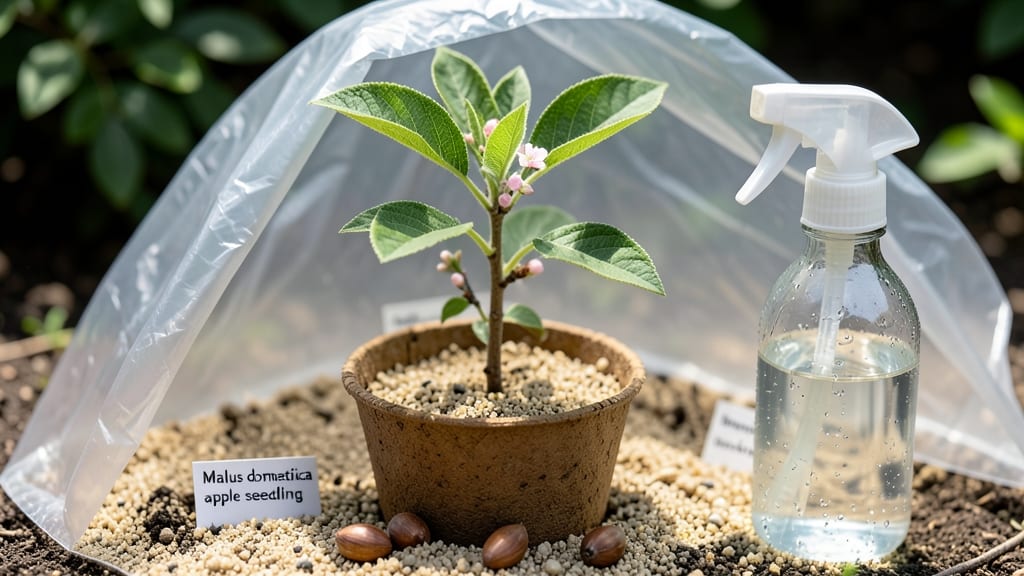
To germinate apple seeds at home, clean them thoroughly, wrap in a damp paper towel, seal in a plastic bag, and refrigerate for 4-6 weeks (cold stratification). After this period, plant the seeds 1/4-inch deep in moist potting soil and maintain warm, indirect light until sprouts emerge (usually 2-6 weeks).
Apple seeds need cold stratification to break their natural dormancy—a process that mimics winter's chilling effect.
This trick helps the seeds recognize when conditions are right to grow, typically by converting stored nutrients into growth hormones. 🌱 Without this step, many seeds simply won't sprout, even with perfect warmth and moisture later.
I've found that using a standard refrigerator (around 34-40°F) works best, though some gardeners swear by outdoor winter planting for even better results.
Once you've completed the cold treatment, planting becomes straightforward. Use a well-draining potting mix and keep the soil consistently moist but not soggy—overwatering can cause rot before sprouts even appear.
A humidity dome or clear plastic wrap helps maintain ideal conditions during the early stages. Most seeds will sprout within 2-4 weeks after planting, though some varieties may take longer.
💡 In This Article
- Why Cold Stratification Boosts Apple Seed Germination
- Step-by-Step Apple Seed Germination Guide with Success Tips
Why cold stratification boosts apple seed germination
Cold stratification mimics nature's winter chilling period, a critical trigger for apple seeds to break dormancy. When seeds experience cold temperatures (typically 34-45°F), they undergo biochemical changes that prepare them for growth. The hormone abscisic acid, which maintains dormancy, decreases while gibberellins—growth-promoting hormones—increase.
This shift allows the seed's embryo to activate and begin metabolizing stored nutrients. Without this cold treatment, many apple seeds remain dormant indefinitely, even with proper warmth and moisture later. 🌱
The process also improves moisture absorption by softening the seed coat, which is often tough and impermeable. During stratification, the seed coat becomes more porous, allowing water to penetrate more easily when planting time arrives.
This is why seeds often sprout faster after cold treatment—some gardeners report germination rates jumping from 10% to over 70% with proper stratification. The ideal duration varies by apple variety, but 4-6 weeks in the fridge replicates a typical winter's chilling effect.
Natural stratification occurs when seeds fall to the ground in autumn and experience freezing temperatures over winter. However, artificial stratification in your refrigerator speeds up this process dramatically. While outdoor winter planting can take months, refrigeration achieves the same hormonal changes in just 4-6 weeks.
The key is maintaining consistent cold without freezing—temperatures below 32°F can damage the seed's cellular structure. A standard fridge's vegetable drawer (around 38°F) provides perfect conditions for most apple seeds.
What most people don't realize is that stratification also helps break seed coat hardness through a process called "scarification." The cold causes microscopic cracks in the seed coat, making it easier for water and oxygen to reach the embryo.
This dual mechanism—hormonal changes plus physical softening—explains why stratified seeds often sprout within 1-2 weeks after planting, compared to the 4-6 weeks unstratified seeds might take. The combination creates an ideal environment for rapid, synchronized germination. 💫
For best results, combine cold stratification with proper moisture control. The damp paper towel method works because it maintains 80-90% humidity around the seeds without creating anaerobic conditions (which cause rot). This balance prevents mold while keeping the seed coat pliable.
Some gardeners add a sprinkle of hydrogen peroxide to the water to prevent bacterial growth—a trick that can boost success rates by 15-20% in humid climates. The goal is to replicate the natural conditions seeds experience in forest litter during winter.
Interestingly, some apple varieties respond better to stratification than others. Seeds from crabapple trees often germinate more reliably than those from cultivated apple varieties, which may have been bred for specific traits that affect dormancy.
If you're working with heirloom apple seeds, consider testing a small batch first to determine the optimal stratification time for your specific variety. The slight variations in seed coat thickness and chemical composition can mean the difference between 50% and 90% germination success. 🔥