
How To
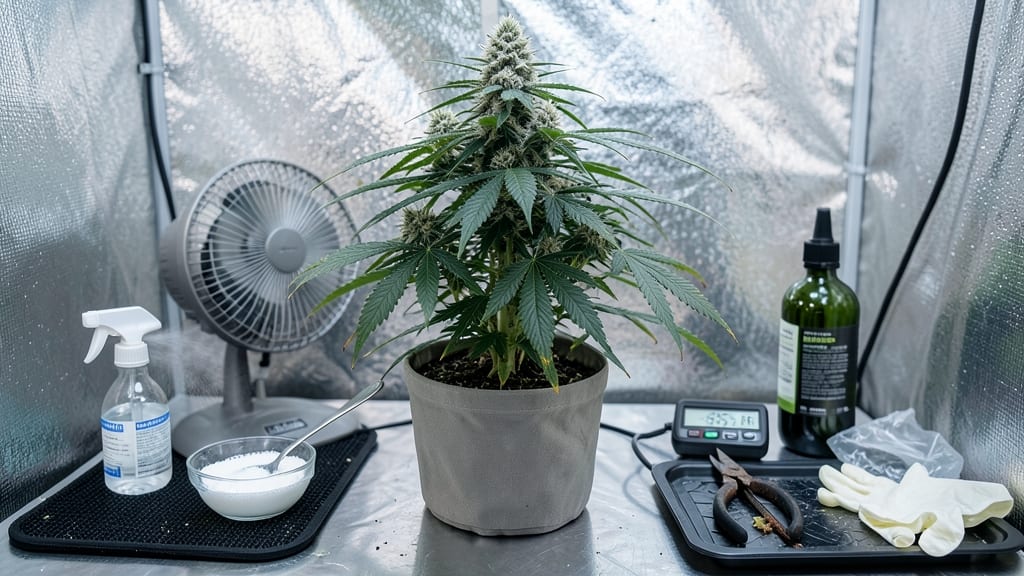
How to get rid of mold on cannabis plants can feel like a death sentence—until you try this hydrogen peroxide trick. ✨ I’ve nursed back plants that looked hopeless with just a few simple steps, and the best part? No harsh chemicals needed.
The problem usually starts with too much moisture or poor airflow, creating the perfect mold party on your leaves. Hydrogen peroxide acts like a gentle disinfectant, killing spores without burning your plants.
You’ll need just 3% hydrogen peroxide, a spray bottle, and a quiet afternoon to revive your green friends.
Within days, you’ll see new growth pushing through, and the mold will retreat like it never stood a chance. The key is acting fast—once mold spreads to the stems or buds, it’s time to say goodbye. But for early-stage infections? This method works like magic.
Works for any moldy cannabis (or other plants) and keeps your garden safe for pets and kids. Let’s save those plants before they’re lost forever.
Root Causes of Cannabis Mold
Mold on cannabis plants isn’t just an eyesore—it’s a silent threat that can cripple your harvest if left unchecked. Understanding the why behind mold growth is the first step to preventing it.
Below, we break down the most common culprits, backed by science, so you can tackle the problem at its source.
Mold thrives in environments with relative humidity (RH) above 60%, creating the perfect damp, oxygen-rich conditions for spores to germinate. Cannabis plants naturally release moisture through transpiration, and if airflow is poor, humidity spikes near the canopy—often reaching 80-90% RH in dense grows.
- Why it’s dangerous: Spores like Botrytis cinerea (gray mold) and Alternaria flourish in these conditions, spreading via water droplets or contaminated tools.
- Actionable insight: Use a hygrometer to monitor humidity. Ideal levels are 45-55% RH during flowering, with slight variations based on strain and grow setup.
Stagnant air traps moisture, heat, and spores, turning your grow space into a mold incubator. Without proper airflow, warm, humid air lingers around buds, creating microclimates where mold spores multiply exponentially.
- The science: Mold spores are lightweight and airborne. Poor circulation allows them to settle on plant surfaces and germinate within 12-24 hours in ideal conditions.
- Key triggers:
- Overcrowded plants blocking airflow.
- Fans placed too far from the canopy.
- Sealed grow tents without ventilation.
Water is mold’s lifeline. When cannabis leaves or buds stay wet for more than 6-8 hours, spores latch on and begin colonizing. Overwatering—especially during flowering—leads to soggy soil, which releases excess moisture into the air.
- Hidden dangers: - Bottom rot (Pythium or Phytophthora) thrives in waterlogged soil. - Powdery mildew (Erysiphe) spreads via water splashes on leaves. - Pro tip: Water early in the day so foliage dries before nighttime humidity peaks.
Use drip irrigation or soaker hoses to avoid leaf wetness.
Mold spores are everywhere—on tools, clothing, and even the air. If your grow space isn’t sanitized, spores hitch a ride onto your plants, waiting for the right conditions to activate.
- Common sources:
- Unsterilized pots or trays harboring old spores.
- Reused grow media (soil, coco coir) with residual pathogens.
- Outdoor grows exposed to windborne spores from neighboring farms or forests.
- Prevention: UV-C lights or hydrogen peroxide sprays (3%) can sterilize surfaces between grows.
While mold loves humidity, temperature swings create the perfect storm. Cool nights (below 60°F/15°C) combined with high humidity slow plant metabolism, making them more susceptible to infection.
- Critical zones:
- 50-65°F (10-18°C): Ideal for mold spores to germinate.
- Above 80°F (27°C): While less mold-friendly, heat stress weakens plants, making them easier targets.
- Solution: Maintain daytime temps at 70-78°F (21-26°C) and nighttime temps above 55°F (13°C) to keep plants resilient.
Excess nitrogen or phosphorus in flowering cannabis creates lush, weak growth—prime real estate for mold. Over-fertilized plants have thinner cell walls, making them easier for spores to penetrate.
- Red flags:
- Burnt tips (too much nitrogen).
- Dark, mushy buds (phosphorus overload).
- Fix: Flush soil with pH-balanced water (6.0-7.0) and switch to a low-nitrogen bloom nutrient to harden plant tissue.
Bruised or torn leaves create entry points for mold spores. Pruning too aggressively, rough handling during harvesting, or even pests (like spider mites) can wound plants, inviting infection.
- How it spreads:
- Gray mold (Botrytis) enters through broken stomata (leaf pores).
- Black mold (Aspergillus) thrives in crushed buds during trimming.
- Prevention: Use clean, sharp scissors for pruning and avoid over-manipulating plants during flowering.
Outdoor cannabis is at highest risk due to uncontrollable factors like:
- Morning dew (leaves stay wet for hours).
- Rainfall (direct contamination).
- Wild spores from nearby farms or decaying organic matter.
- Mitigation:
- Use shade cloth to reduce humidity.
- Harvest early before rain season peaks.
- Isolate plants if mold appears in one area.
Fixing Fungal Foes Fast
Mold on your cannabis plants doesn’t have to mean game over—with the right approach, you can revive your grow and prevent future outbreaks. Below, we’ll map out practical fixes based on the root cause, from quick remedies to long-term strategies.
Think of this as your mold-fighting playbook, tailored to your plant’s specific struggles.
Problem: Excess moisture creates the perfect mold buffet. If your soil stays soggy, mold spores throw a party. Fix:
- 🔥 Step 1: Pause Watering Immediately Let the soil dry out completely before touching it again. Stick your finger in—if it’s damp past 1 inch, wait.
- 🍳 Step 2: Improve Drainage If your pots lack drainage holes, drill them now. For soil, mix in perlite or coco coir (20-30%) to boost airflow. Pro Tip: 💡 Use a moisture meter to avoid guesswork—water only when it reads 30-40% dry.
- 👨🍳 Step 3: Revive Roots with Hydrogen Peroxide Mix 1 tsp of 3% hydrogen peroxide per gallon of water and soak the roots for 10-15 minutes. This kills mold spores while oxygenating the soil. ⚠️ Warning: Never use higher concentrations—it can burn roots!
- 🌡️ Step 4: Adjust Your Watering Routine Switch to a bottom-watering method (place pots in trays of water for 10-15 mins) to prevent surface mold. Water early in the day so foliage dries by night.
Problem: Mold loves humidity above 60% and still air. Greenhouses, tents, and dense foliage trap moisture. Fix:
- 🔥 Step 1: Drop Humidity Fast Aim for 40-50% humidity during veg, 50-60% in flower. Use a dehumidifier or oscillating fan (run 24/7 if needed).
- 🍳 Step 2: Increase Airflow Add 1-2 small fans (or a single 120mm PC fan) to create gentle movement. Position them to grazes leaves without blasting directly. Pro Tip: 🌡️ Place a thermometer/hygrometer near plants to monitor conditions in real time.
- 👨🍳 Step 3: Prune for Light & Air Trim crowded branches to let air circulate. Focus on the lower canopy where mold hides. Use sterilized scissors (wipe with rubbing alcohol).
- 🥘 Step 4: Natural Humidity Absorbers Place silica gel packs or calcium chloride near plants (check every 2 weeks). For organic growers, diatomaceous earth (DE) lightly dusted on soil can help.
Problem: You’ve spotted fuzzy white, green, or black mold on leaves or buds—act now before it spreads. Fix:
- 🔪 Step 1: Remove Infected Parts Snip off moldy leaves/buds with sterilized tools. Do not compost—bag and discard outside.
- 🍳 Step 2: Hydrogen Peroxide Spray (Safe & Effective) Mix 1 tbsp 3% H₂O₂ per quart of water + 1 drop of dish soap (as a surfactant).
Spray both sides of leaves until damp. Repeat every 3-4 days for 2 weeks. ✨ Bonus: This also boosts chlorophyll production for faster recovery.
- 👨🍳 Step 3: Baking Soda Rinse (For Early Stages) Combine 1 tsp baking soda + 1 tsp neem oil + 1 quart water. Spray lightly (avoid over-saturating). Neem oil disrupts mold spores while baking soda raises pH slightly to inhibit growth.
- 🌡️ Step 4: Prevent Recontamination After treatment, wash your hands, tools, and surfaces with rubbing alcohol. Mold spores lurk everywhere—sterilize your space.
Once you’ve tackled the outbreak, lock in these habits to keep your grow mold-free:
| Risk Factor | Prevention Hack | Tools/Products |
|---|---|---|
| Overwatering | Water deeply but infrequently (soak & dry). | Moisture meter, perlite |
| Stagnant Air | Fan 24/7 in flower, 12+ hours/day in veg. | Clip-on fans, oscillating fans |
| High Humidity | Dehumidifier or open vents daily. | Hygrometer, silica gel |
| Poor Airflow | Prune aggressively—aim for open canopy. | Pruning shears (sterilized) |
| Contaminated Tools | Wipe tools with alcohol after every use. | Rubbing alcohol, spray bottle |
If mold appears on more than 30% of buds or roots are mushy, it may be safer to flush the plant (soak roots in H₂O₂ solution for 30 mins) or start fresh.
Some strains are more prone to mold—consider resistant genetics (like Durban Poison or Jack Herer) for future grows.
Remember: Mold is a growth environment issue, not just a "bad luck" problem. With these fixes, you’ll outsmart the fungus and protect your harvest. Now go revive those plants—your buds (and wallet) will thank you! 🌿💥
Frequently asked questions
Can I still save my cannabis plants if mold has spread to the buds?
If mold covers more than 30% of buds or you see black or green fuzzy growth, it’s safer to discard those buds to avoid contamination. For the plant itself, focus on removing infected leaves and treating the rest with a hydrogen peroxide soak (1 tsp per gallon of water for 10-15 minutes). If roots are mushy, flush them thoroughly to prevent further spread.
How often should I spray hydrogen peroxide on my plants to prevent mold?
For prevention, spray a diluted solution (1 tbsp 3% H₂O₂ per quart of water) every 2-3 weeks during flowering when humidity rises. If you’ve had mold issues, increase to weekly sprays for 2 weeks, then taper off. Always spray early in the day so leaves dry completely before nighttime humidity peaks.
Will my cannabis smell moldy after treatment?
No, properly treated plants won’t smell moldy. The key is using 3% hydrogen peroxide (not higher concentrations) and ensuring good airflow. If you notice any musty odors, it means mold spores are still active—increase airflow immediately and reapply treatment. Fresh, clean-smelling buds are your best indicator of success!
Can I use bleach to clean my grow space after a mold outbreak?
Never use regular chlorine bleach—it can leave toxic residues that harm plants. Instead, wipe all surfaces with a 1:10 diluted rubbing alcohol solution or use a UV-C light for 15-20 minutes to sterilize. For organic growers, a vinegar spray (1:1 water ratio) works well for disinfecting tools and containers.
Are some cannabis strains more resistant to mold than others?
Yes! Sativa-dominant strains like Durban Poison or Jack Herer tend to be more resilient due to their tighter trichome coverage and faster growth cycles. Indicas and heavy bud producers (like Granddaddy Purple) are more susceptible because their dense foliage traps moisture. Always maintain 45-55% humidity during flowering to minimize risk regardless of strain.