
Picking
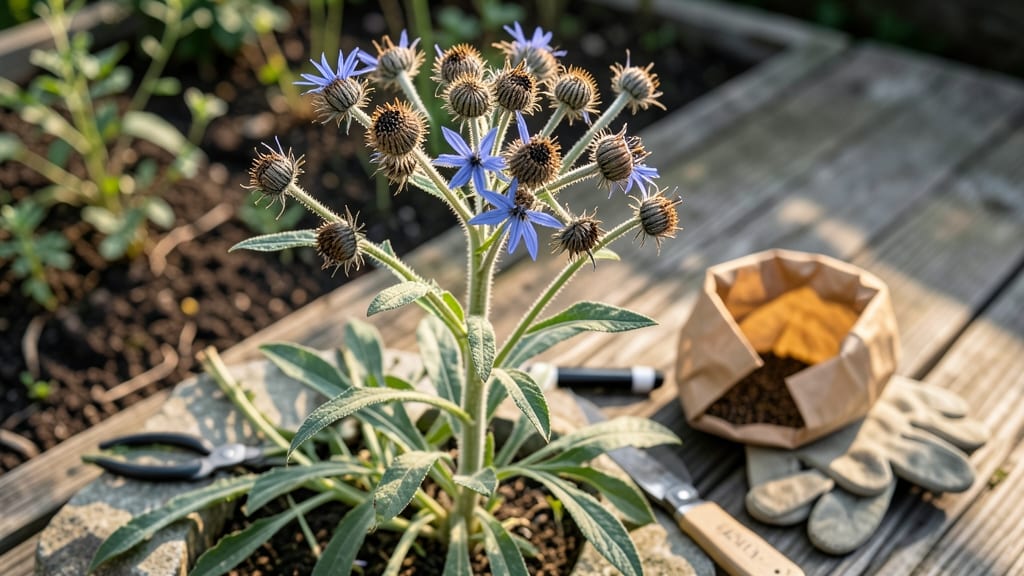
Borage seeds transform from blue star-shaped flowers to tiny treasure chests of next year's harvest. The trick to harvesting them is patience—waiting until the seed heads turn from vibrant blue to a papery brown before collecting. I've learned that rushing this step means lower germination rates and wasted effort.
You'll need just three things: a pair of clean scissors or pruners, a paper bag for collecting, and a sunny day when the seed heads are completely dry. The best time to harvest is late afternoon when the dew has evaporated but the seeds haven't started dispersing.
Bees love borage, so work quickly to avoid losing seeds to pollinators.
Once you've gathered the seed heads, let them dry completely indoors for about 2 weeks before gently rubbing them to release the seeds. Store them in a cool, dark place in an airtight container where they'll remain viable for 3-4 years.
The seeds are tiny but pack a punch—each one holds the potential for a bushy, blue-flowered plant.
Watch out for premature seed dispersal and mold when storing—these are the biggest challenges. If you time it right, you'll end up with enough seeds to share with fellow gardeners or start a small seed business.
The first time I successfully harvested borage seeds, I planted them all and was overwhelmed by the resulting plants.
📚 In This Guide
- What you need
- Instructions
- Tips and common mistakes
- Wrapping up and next steps
What you need
- ● Sharp pruning shears or garden scissors – For cleanly snipping seed heads (avoid dull blades to prevent crushing seeds).
- ● Brown paper bags or breathable fabric sacks – At least 3-5 bags (10x12 inches) to collect seeds and allow airflow.
- ○ Gloves (optional but recommended) – Protects hands from borage’s prickly stems and potential skin irritation.
- ● Tweezers or small tongs – Helpful for separating seeds from chaff or stubborn seed heads.
- ● Drying tray or screen – A flat, elevated surface (like a wire rack or cardboard) to spread seeds for drying.
- ● Fine-mesh sieve or strainer – For sifting seeds from dried debris (mesh size: ~0.1 inch).
- ● Permanent marker & labels – To tag bags with harvest dates or borage varieties.
- ● Seed storage containers – Airtight jars or envelopes with silica packets to preserve viability.
- ● Humidity pack or dehumidifier – Speeds up drying in damp climates.
- ● Magnifying glass – For inspecting seed quality before storage.
- ● Twine or rubber bands – To bundle seed heads before drying if air circulation is limited.
Step-by-Step instructions for harvesting borage seeds
Mastering seed harvest timing transforms this self-seeding annual into a bountiful perennial resource.
Identify the Right Seed Heads
Borage produces striking star-shaped flowers that develop into spiky seed heads resembling miniature pinecones. Wait until the flowers fade and the seed heads turn a deep, papery brown—this signals full maturity. The seed heads should feel dry to the touch and rattle slightly when shaken, indicating seeds are fully developed.
Harvest on a dry morning after the dew has evaporated. This prevents moisture from clinging to the seeds and causing mold during storage. Avoid harvesting after rain, as damp seed heads may take longer to dry completely. I like to harvest in batches of 4-6 seed heads at a time to maintain freshness.
Collect and Dry the Seed Heads
Gently twist or cut the seed heads from the stems, leaving a small portion of the stalk attached to prevent seeds from scattering. Place them in a single layer on a clean, dry surface—such as a mesh screen or paper towel—where they can air-dry for 7-10 days in a warm, dry location. Choose a spot with good airflow but out of direct sunlight to prevent overheating.
During drying, shake the seed heads occasionally to release any loose seeds. This also helps break down the seed head structure, making it easier to extract the seeds later. If your climate is humid, consider using a small fan on low to circulate air and speed up the process. The seeds are ready when they easily detach from the dried seed head with minimal pressure.
Extract and Store the Seeds
Once fully dry, rub the seed heads between your hands or use a clean, dry cloth to gently coax out the seeds. Borage seeds are small and dark, resembling tiny black specks. I find it easiest to work over a sheet of white paper or a light-colored tray to spot any missed seeds. Sift through the debris to separate the seeds from chaff and other plant material.
Store the cleaned seeds in a sealed, airtight container—such as a small glass jar or envelope—preferably in a cool, dark place like a pantry or refrigerator. Label the container with the date to track freshness. Borage seeds remain viable for 2-3 years when stored properly, though germination rates may decline after the first year. For best results, use seeds within the first year of harvest.
Test Germination (Optional but Recommended)
Before storing seeds long-term, conduct a simple germination test to ensure viability. Moisten a paper towel and place a small sample of seeds—about 10-15 seeds—on the damp towel. Fold the towel and place it in a sealed plastic bag. Store the bag in a warm location, such as on top of the refrigerator, and check for sprouts after 7-10 days.
A germination rate of 70% or higher indicates healthy seeds ready for planting. If fewer than half sprout, consider harvesting more seed heads or using the remaining seeds for immediate planting. This step helps you avoid wasting time and resources on low-quality seeds. I always test a small batch before committing to a full planting season.
Tips & tricks for perfect borage seed harvesting
These proven strategies will help you maximize your borage seed yield while preserving quality and viability.
Timing is Everything: The 7-10 day drying period in Step 2 is non-negotiable for seed viability. If your climate is particularly humid, supplement with a small fan on low to maintain consistent airflow. I've found that placing seed heads on a mesh screen over a cardboard box creates an ideal airflow system while preventing seeds from falling through. The key is balancing airflow with gentle drying—too much heat or direct sunlight can actually reduce germination rates.
Visual Cues for Maturity: In Step 1, when identifying mature seed heads, look for three distinct visual cues: the deep papery brown color, the dry texture that rattles when shaken, and the faded star-shaped flowers. I've learned to harvest when about 80% of the seed heads meet these criteria—this gives you a buffer for any that might not be fully mature. The stalk should snap cleanly when twisted, indicating the seed head is ready for collection.
Storage Wisdom: When storing your cleaned seeds in Step 3, consider adding a small silica gel packet to your airtight container. This helps absorb any residual moisture that could compromise viability over time. I've had success with small glass jars with tight-sealing lids, as they provide both protection and easy visibility for checking seed levels. Remember that while seeds remain viable for 2-3 years, their germination rate peaks within the first year—so label your containers with the harvest date to track freshness.
Germination Test Shortcut: For the germination test in Step 4, you don't need to use a full 10-15 seeds. I typically test just 5 seeds to save time and resources. Place them on a damp paper towel in a sealed plastic bag, then store it in a warm location like on top of your refrigerator. Check for sprouts every 2-3 days starting at day 7—you'll often see results before the full 10 days if your seeds are healthy. This quick test helps you make informed decisions about whether to store seeds long-term or use them immediately for planting.
Pro Tips for Harvest Borage Seeds
- These proven strategies will help you maximize your borage seed yield while preserving quality and viability.
- Timing is Everything: The 7-10 day drying period in Step 2 is non-negotiable for seed viability.
- Visual Cues for Maturity: In Step 1, when identifying mature seed heads, look for three distinct visual cues: the deep papery brown color, the dry texture that rattles when shaken, and the faded star-shaped flowers.
Frequently asked questions
Got questions about harvesting borage seeds? You’re not alone! Here are some of the most common concerns—and their straightforward answers—to help you master the process like a pro.
When is the best time to harvest borage seeds?
The ideal time is when the seed heads turn brown and papery, usually 4–6 weeks after flowering. If you wait too long, the seeds may scatter or lose viability. Harvest on a dry, sunny morning for best results—this ensures the flowers are fully mature but haven’t started shedding.
How long does it take for borage seeds to mature?
From flower bloom to seed readiness, it typically takes 30–45 days, depending on your climate and growing conditions. In warmer regions, this process may be faster (as little as 3 weeks), while cooler areas might extend it to 6–8 weeks. Keep an eye on the flowers—they’ll start wilting and turning brown when they’re ready!
Can I harvest borage seeds from store-bought plants?
Yes, but with a caveat: store-bought borage is often grown for ornamental or culinary use, not seed production. If the plant has healthy, open flowers and hasn’t been treated with chemicals, you can still harvest seeds—though yields may be smaller. For maximum seed output, grow from saved seeds or organic sources.
What if my borage seeds won’t open or release?
If the seed heads stay closed or refuse to release seeds, try these tricks:
- Dry them further: Place the heads in a paper bag and leave them in a warm, dry spot for a few extra days.
- Gently shake or rub: Once brown, rub the seed head between your fingers or tap it lightly to loosen seeds.
- Avoid moisture: Damp conditions can cause mold—harvest only when fully dry!
Can I save borage seeds for next year’s planting?
Borage seeds stay viable for 2–3 years if stored properly. Clean them thoroughly, let them dry completely, and store in a cool, dark place (like a sealed jar in the fridge or freezer). Label them with the harvest year to track freshness—no fancy equipment needed!
Wrapping up and next steps
Harvesting borage seeds is a rewarding way to ensure a fresh supply of this versatile herb for years to come!
By mastering the peak ripeness tricks—like watching for deep brown seed pods and harvesting on a dry morning—you’ll maximize your yield and enjoy borage’s nutrient-packed benefits in teas, salads, or homemade remedies. 🌱✨
Ready to take the next step? Save your seeds in a cool, dry place and label them clearly. Then, share your newfound expertise with fellow gardeners or experiment with growing more borage for an even bigger harvest next season!