
Companion Plants
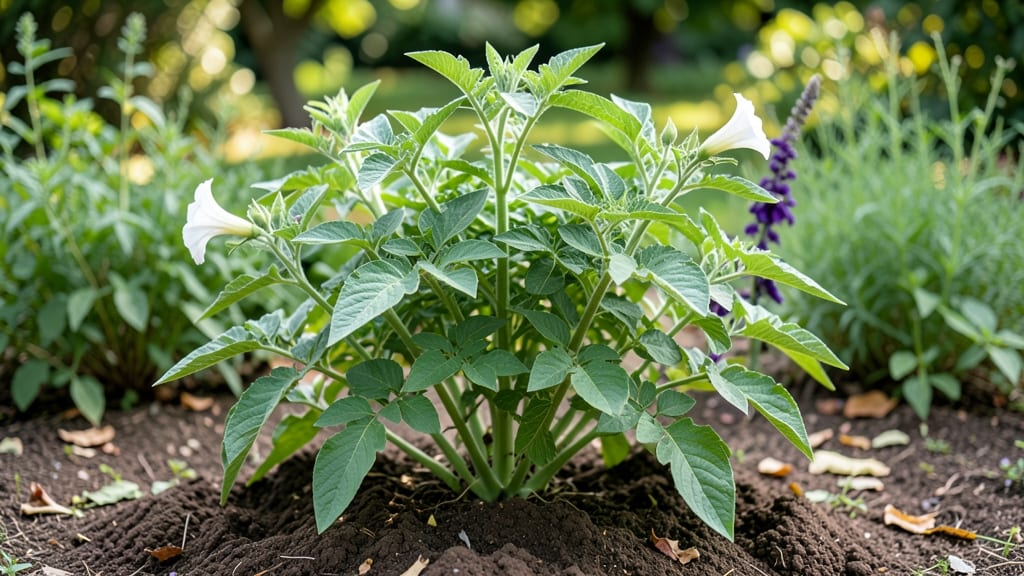
How to identify potato plants early saves you from weeding confusion. 🌱 Those first fuzzy leaves look like weeds until you know the telltale signs—leaf shape, growth pattern, and how they climb. I used to pull my own potatoes thinking they were dandelions until I learned these key tricks.
The secret lies in the leaves: potato foliage is deeply lobed, almost like a maple leaf but with more jagged edges. Russets have rough, blue-green leaves, while red potatoes show smoother, lighter green ones. Watch for vines too—they grow in a spiral pattern as they search for support.
By the time flowers appear (white or purple blooms), you’ll never mistake them again. Healthy plants grow 3-6 inches per week, while diseased ones show yellow spots or stunted growth. A quick leaf rub test reveals the difference: healthy leaves feel firm, not mushy.
This works for all varieties—whether you're growing fingerlings or russets. The earlier you spot them, the more tubers you’ll harvest. Here’s how to tell them apart from weeds and pests at every stage.
📚 In This Guide
- What you need
- Instructions
- Tips and common mistakes
- Wrapping up and next steps
What you need
- ● Healthy potato seeds or seed potatoes: Choose certified disease-free seed potatoes (about 3–4 per plant, depending on variety). Pro tip: Look for "organic" or "seed potato" labels for better germination rates!
- ● Gardening gloves: A pair of breathable, durable gloves (e.g., nitrile-coated or leather) to protect your hands from soil and sharp stems.
- ● Trowel or hand fork: A sturdy, 6–8" gardening trowel for planting and transplanting seedlings.
- ● Measuring tape or ruler: To track plant height and spacing (aim for 12–18" apart for optimal growth).
- ● Notebook or plant journal: For recording observations like leaf shape, color, and growth patterns.
- ● Camera or smartphone: To capture close-ups of leaves, stems, and early flowers (if applicable).
- ● Reference guide or app: A printed or digital potato plant identifier (e.g., University of Maine Potato Variety Guide or the PlantNet app).
- ● Garden twine and stakes: To support vining varieties (like Red Pontiac) as they grow taller.
- ● Soil pH test kit: Potatoes thrive in slightly acidic soil (pH 5.0–6.5). Adjust with lime or sulfur if needed.
- ● Organic mulch (straw or grass clippings): To retain moisture and suppress weeds around young plants.
- ● Magnifying glass: For inspecting tiny leaf details or signs of pests/diseases.
- ● Companion plant list: If testing nearby plants for identification, note common companions like beans, corn, or marigolds.
Step-by-Step guide to identifying potato plants in early growth
Here's how I spot potato plants before they even bloom—using leaf shape and growth patterns.
🌱 Step 1: Look for the Classic Potato Leaf Shape
Potato leaves are compound, meaning they have multiple leaflets arranged on a central stem. Each leaflet is oval-shaped with a slightly pointed tip and jagged edges. Think of them as miniature maple leaves—roughly 2-4 inches long when fully grown. I always check for these 5-7 leaflets per leaf arranged in a fan-like pattern.
If you see leaves that look more like a single broad leaf (like a tomato) or deeply lobed (like a pumpkin), it's not a potato. The key is that potato leaves are hairy on the underside—run your fingers over them gently. That fuzzy texture is a dead giveaway.
🌿 Step 2: Observe the Growth Pattern and Stems
Potato plants grow in a distinctive bushy pattern. The main stem rises straight up, and smaller stems branch out at 45-degree angles. These side stems are where the tubers form underground. Watch for purple-tinged stems in some varieties—this is normal and doesn't mean the plant is diseased.
If the plant has a single main stem with leaves growing directly opposite each other (like a tomato), it's not a potato. Potatoes grow in a zigzag pattern—the stems bend slightly at each leaf node. This is how I tell them apart from other nightshades.
✂️ Step 3: Check for Flowers (If Present)
Potato flowers are another great clue, though they don't always appear. When they do, they're white, pink, or purple with five petals and yellow centers. Each flower grows on a short stem that comes out from the leaf axils (where the leaf meets the stem). If you see these, you're dealing with a potato plant.
Here's the thing—some gardeners remove potato flowers to encourage more tuber growth. But if you're just trying to identify the plant, leave them be. The flowers are a clear sign, but the leaves and stems are your best bet for early identification.
💧 Step 4: Compare with Common Look-Alikes
Potatoes are often confused with tomatoes, eggplants, and peppers. Tomatoes have hairless stems and leaves that grow in pairs directly opposite each other. Eggplants have large, rough, heart-shaped leaves with a single main stem. Peppers have smooth, waxy leaves and grow more upright.
I keep a small reference chart nearby when I'm identifying plants. The key difference is that potato leaves are compound and hairy, while their look-alikes have simple, smooth leaves. If you're still unsure, dig up a small section of the plant—you'll find those signature brown, scaly tubers underground.
☀️ Step 5: Time Your Identification Correctly
Potato plants are easiest to identify when they're 4-6 weeks old, just as they're starting to bush out. At this stage, the leaves are large enough to see clearly but the plant isn't so tall that you can't examine the stems. If you're checking later in the season, look for the purple or green tubers forming underground as another clue.
Don't wait until the plant is flowering if you're trying to identify it early. Some varieties (like fingerlings) might not flower at all. Instead, focus on the leaf shape, stem pattern, and hairy texture—those never change, no matter the variety.
Tips & tricks for identifying potato plants with confidence
These practical tips will help you spot potato plants like a pro, even when they're still young and unassuming.
Leaf Texture is Your Secret Weapon: In Step 1, when checking for the classic potato leaf shape, don't just look—touch! The fuzzy, hairy underside of potato leaves is the most reliable distinguishing feature. I've seen many gardeners overlook this detail and confuse potatoes with tomatoes or eggplants. That fuzzy texture is your best friend for early identification, especially when flowers haven't appeared yet.
Growth Pattern Pays Off: The 45-degree angle of those side stems in Step 2 is what sets potatoes apart from their look-alikes. I always remember this by imagining a tree branch—potatoes grow like a bushy tree with stems branching out at that distinctive angle. This pattern becomes more obvious as the plant matures, but you can start noticing it even in those 4-6 week old plants mentioned in Step 5.
Timing is Everything: Those 4-6 weeks in Step 5 are the sweet spot for identification. That's when the leaves are large enough to examine properly but before the plant gets too tall and unwieldy. I've made the mistake of waiting too long before trying to identify plants, only to find them too mature to examine closely. Get in the habit of checking your garden every 2 weeks during the growing season—you'll catch those early growth stages that make identification easiest.
Make a Visual Cheat Sheet: Create a simple reference chart comparing potato leaves with their common look-alikes. Include the key features: compound leaves with 5-7 leaflets, hairy undersides, and that zigzag stem pattern. Keep this chart handy when you're out in the garden. I've found that having a visual reference makes identification much faster and more accurate, especially when you're dealing with multiple plant types in your garden.
Pro Tips for Identify Potato Plants
- These practical tips will help you spot potato plants like a pro, even when they're still young and unassuming.
- Leaf Texture is Your Secret Weapon: In Step 1, when checking for the classic potato leaf shape, don't just look—touch!
- Growth Pattern Pays Off: The 45-degree angle of those side stems in Step 2 is what sets potatoes apart from their look-alikes.
Frequently asked questions
Got questions about spotting potato plants before they bloom? You’re not alone!
Here are answers to the most common queries—whether you’re troubleshooting early growth, dealing with pests, or just curious about what’s popping up in your garden.
How do I tell the difference between potato plants and weeds?
Potato plants have hairy, compound leaves with 3–9 leaflets (often in sets of 3s), while weeds like bindweed or nutsedge have smooth, single leaves or vines. Check the stems too—potato stems are hollow and green (not purple or fuzzy). If in doubt, dig up a clump: potato roots will have tiny tubers!
When can I confirm my potato plants are ready for harvest?
You can’t fully confirm until flowering (if your variety blooms), but you can gently brush soil away from stems 2–3 weeks after flowering to spot finger-sized tubers. For new potatoes, wait until plants flower and leaves start yellowing—dig a few to check size. Pro tip: Harvest on a dry day to avoid soil sticking to skins!
What do potato plant leaves look like when they’re diseased?
Healthy leaves are dark green and waxy, but watch for:
- Blight (late blight): Dark, greasy spots with white mold on undersides.
- Scab: Rough, corky patches on leaves/stems.
- Virus (e.g., mosaic): Yellow streaks or stunted growth.
If you spot these, remove infected plants immediately and rotate crops next season. Copper fungicide can help prevent blight.
Can I grow potatoes in containers? How do I identify them there?
In containers, potato plants look the same—hairy stems, compound leaves—but tubers form around the pot’s edges. To identify them, lift the plant gently and check for bumpy, knobby growths on roots. Use 5-gallon pots or deeper (12+ inches) for best results, and harvest when foliage yellows.
Why are my potato plants wilting even though the soil is wet?
Wilted leaves with yellowing or brown edges often signal blight or root rot. Check soil moisture—overwatering can suffocate roots. If stems feel soft or mushy when squeezed, it’s likely rot. Fix it: Improve drainage, avoid overhead watering, and consider a mycorrhizal fungus to boost root health.
Wrapping up and next steps
Identifying potato plants early on ensures a thriving harvest and helps you avoid confusion with weeds or other crops. By paying attention to leaf shape, stem structure, and growth habits, you’ll confidently spot those spuds before they even bloom! 🌱
Now that you’re armed with these clues, get out there and dig in—literally! Start by planting a few seed potatoes in your garden or containers, and watch them grow into a bountiful crop. Happy gardening! 🌿✨