
Container Gardens
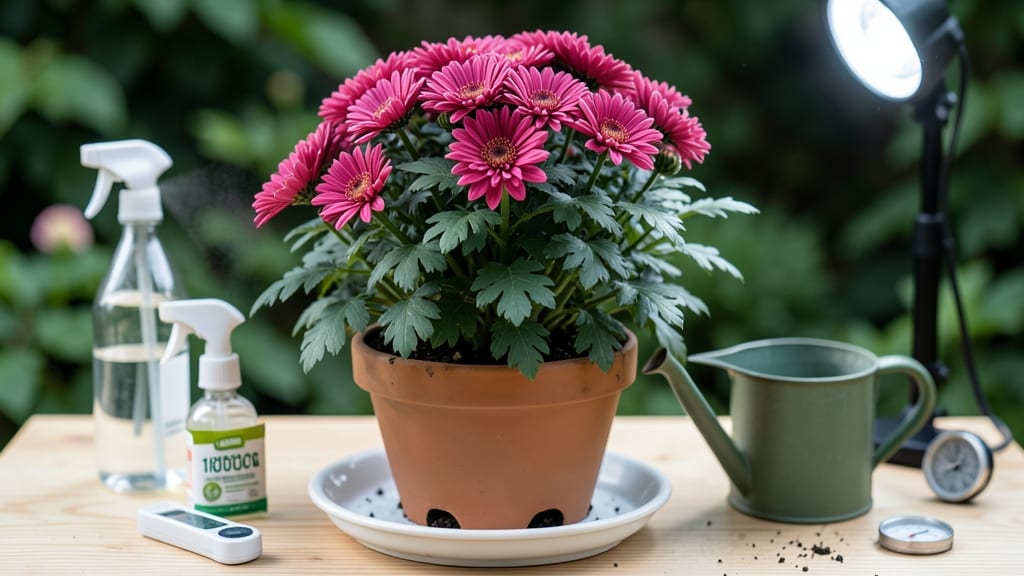
How to keep mums alive indoors feels impossible—until you know the light trick. 🌿 I’ve saved more than a dozen struggling plants by adjusting just one thing: their light exposure. Most people overlook how much these plants hate dim corners, and that’s why they wilt by December. The secret isn’t fancy equipment—it’s matching their needs to your space. Mums crave 6-8 hours of bright, indirect light daily, which means a south- or west-facing window or a grow light for 12-14 hours if natural light is weak. Too little light? Yellow leaves. Too much direct sun? Scorched edges. Strike the balance, and they’ll reward you with blooms all winter. By mid-winter, you’ll see fresh growth pushing through the centers of those old blooms—proof the plant is thriving. The key is consistency: rotate them weekly so all sides get even light, and watch for the deep green leaves that signal happiness. This works for apartment windowsills, office desks, or even sunrooms. The same principles apply whether you’re dealing with a single pot or a whole collection. Let’s fix that droopy mum once and for all.
📚 In This Guide
- What you need
- Instructions
- Tips and common mistakes
- Wrapping up and next steps
What you need
- ● Mums (chrysanthemum plants) – Choose compact, florist-type varieties (e.g., 'Dynasity' or 'Bright Lights') for indoor success. Buy 3–5 plants for a balanced display.
- ● Containers – 5–7 inch pots with drainage holes (terracotta or plastic). 1–2 per plant to allow for repotting if needed.
- ● Well-draining potting mix – A light, airy blend (e.g., 60% peat/coir, 30% perlite, 10% compost) to prevent soggy roots. 1–2 bags (5–10 quarts total).
- ● Grow lights – Full-spectrum LED lights (12–16 watts per plant) or fluorescent bulbs (40W cool white + warm white). 1–2 lights depending on setup.
- ● Timer – A plug-in light timer to regulate 12–14 hours of light daily.
- ● Watering can – A small, narrow-spout can for precise watering (avoid overhead spraying).
- ● Fertilizer – Balanced liquid fertilizer (10-10-10 or 20-20-20), diluted to ½ strength. 1 bottle (16 oz).
- ● Humidity tray – A shallow tray with pebbles and water to boost humidity (especially in dry climates).
- ● Thermometer/hygrometer – To monitor ideal temps (60–70°F) and humidity (40–60%).
- ● Slow-release fertilizer granules – Mix into soil for 3–4 months of nutrients.
- ● Decorative accents – Moss, pebbles, or decorative stones to enhance your indoor mum display!
Step-by-Step instructions for bringing mums indoors and keeping them thriving
Here’s the simple method I’ve used to keep my mums blooming through winter—no green thumb required.
🌿 Step 1: Acclimate Your Mums Before Bringing Them Inside
Start this process 2-3 weeks before the first frost, when nighttime temperatures dip below 50°F. Move your mums to a sheltered spot like a porch or garage during the day, then bring them back inside at night. This gradual shift prevents shock from sudden temperature changes.
Watch for signs of stress: if leaves start wilting or yellowing, extend the acclimation period by another week. The goal is to let the plants adjust to cooler indoor air without going into shock. I like to check the undersides of leaves for pests—this is the perfect time to spot any stowaways before they hitch a ride indoors.
☀️ Step 2: Position Them in Bright, Indirect Light
Place your mums near a south- or east-facing window where they’ll get 6-8 hours of bright, indirect light daily. Direct sunlight will scorch their leaves, while too little light causes stems to stretch and flowers to fade fast. A simple trick: if you can see your handprint on a leaf when you hold it up to the window, the light’s too weak.
Rotate the pots a quarter turn weekly so all sides get even exposure. You’ll notice new growth starting within 2-3 weeks—that’s your signal the light’s just right. If the stems grow too tall and leggy, they’re reaching for more light, and it’s time to supplement with a grow light.
💧 Step 3: Adjust Watering for Indoor Conditions
Mums hate soggy soil, so let the top inch of soil dry out between waterings. Stick your finger in the soil—if it feels dry up to your first knuckle, it’s time to water. Overwatering is the #1 killer of indoor mums, so I always use a pot with drainage holes and an empty saucer underneath to catch excess water.
Use room-temperature water and water at the base of the plant, avoiding the leaves to prevent fungal diseases. You’ll see the soil dry faster indoors because the air is less humid. If the leaves start curling or dropping, you’re likely overwatering—let the soil dry out more between waterings next time.
✂️ Step 4: Prune and Fertilize for Winter Survival
Once your mums are indoors, trim back the stems by one-third to encourage bushier growth. Use clean, sharp scissors and cut just above a leaf node. This might seem drastic, but it prevents the plant from wasting energy on long, weak stems. I also remove any spent blooms to redirect energy into root and leaf growth.
Feed them with a balanced, water-soluble fertilizer (like 10-10-10) diluted to half strength every 4-6 weeks during the winter. Avoid heavy fertilizing now—you’re not growing flowers, you’re keeping the plant alive. If the leaves start yellowing, flush the soil with water to prevent salt buildup from fertilizer.
🪴 Step 5: Maintain Humidity and Watch for Pests
Indoor air is dry, and mums love humidity. Place the pots on a tray filled with pebbles and water, or mist the leaves lightly 2-3 times a week. Avoid getting water on the flowers, though—it can cause them to rot. You’ll notice the leaves staying crisp and green instead of crispy and brown, which is your sign the humidity’s just right.
Check the undersides of leaves weekly for spider mites or aphids. If you spot tiny webs or sticky residue, treat with neem oil or insecticidal soap. I like to do this in the sink with a spray bottle so I don’t miss any hidden pests. A healthy mum indoors is your best defense against pests—so keep those leaves shiny and stress-free!
Tips & tricks for perfect indoor mum care
Here's what I've learned from years of keeping my mums thriving indoors—no gardening degree required.
Acclimation Timing: The 2-3 week acclimation period is crucial, but don't rush it. If your area gets sudden cold snaps, extend this to 4 weeks. I've seen mums go into shock when moved too quickly—watch for leaves that look sad or droopy, that's your warning sign. Confession: I skipped this once and lost three plants that winter.
Light Strategy: That 6-8 hours of bright, indirect light is non-negotiable. If your windows don't get enough sun, supplement with a simple LED grow light placed 6-12 inches above the plants for 4-6 hours daily. I use a timer so I don't forget—my mums get exactly 6 hours of light every day, even when I'm at work.
Watering Wisdom: The "top inch dry" rule is your best friend, but here's the thing: different soils dry at different rates. Test with your finger—if the soil feels damp below your first knuckle, wait another day. I've ruined mums by overwatering in my excitement to keep them alive. Pro tip: Use a moisture meter for foolproof results.
Pruning Precision: When you trim those stems by one-third in Step 4, cut at a 45-degree angle just above a leaf node. This encourages bushier growth and prevents disease from entering the plant. I always sterilize my scissors with rubbing alcohol between plants to avoid spreading any potential infections.
Pro Tips for Keep Mums Alive Indoors
- Here's what I've learned from years of keeping my mums thriving indoors—no gardening degree required.
- Acclimation Timing: The 2-3 week acclimation period is crucial, but don't rush it.
- Light Strategy: That 6-8 hours of bright, indirect light is non-negotiable.
Frequently asked questions
Got questions about keeping your chrysanthemum mums thriving indoors? You’re not alone! Here are answers to the most common concerns—because even the toughest gardeners need a little help sometimes.
How long can I keep mums alive indoors?
With the right care, your mums can last months indoors—typically 8 to 12 weeks or until spring. After that, they may start looking tired, but you can propagate them for next year! Rotate them near a bright window daily to prevent legginess.
Why are my mums’ leaves turning yellow?
Yellow leaves usually mean overwatering or poor drainage. Let the top inch of soil dry out between waterings, and ensure the pot has drainage holes. If yellowing spreads, trim the affected leaves and check for root rot (smelly, mushy roots = time for repotting!).
Can I use regular indoor lights instead of grow lights?
Regular indoor lights won’t cut it—mums need 12+ hours of bright, cool light daily. If your space lacks natural light, invest in a full-spectrum LED grow light (6–12 inches above the plant) for 6–8 hours a day. Fluorescent bulbs work in a pinch but may slow blooming.
What’s the best way to revive a droopy mum?
Drooping often signals thirst or stress. First, check the soil—if dry, water deeply until it drains from the bottom. If the pot feels heavy but the soil is soggy, it’s root-bound. Gently remove it, trim any mushy roots, and repot in fresh, well-draining soil. Mist the leaves lightly to boost humidity.
Can I keep mums alive indoors for next year?
After blooming, prune spent flowers and reduce watering. Move them to a cooler spot (50–60°F) with minimal light until spring. In early spring, repot in fresh soil, fertilize lightly, and reintroduce bright light to encourage regrowth. Some varieties may rebloom!
Wrapping up and next steps
Keeping your mums alive indoors is all about mimicking their natural habitat with smart lighting, proper care, and a little patience! 🌿 By choosing the right containers, optimizing grow lights, and staying consistent with watering and humidity, you can enjoy vibrant blooms year-round.
Remember, even indoor gardening is a learning curve—don’t be discouraged if it takes a few tries to find your rhythm.
Now that you’re armed with these tips, take the leap and bring that cheerful pop of color inside! Start small with a single plant, experiment with your setup, and soon you’ll have a thriving indoor mum garden that brightens every room. Happy growing! 🌸