
Companion Plants
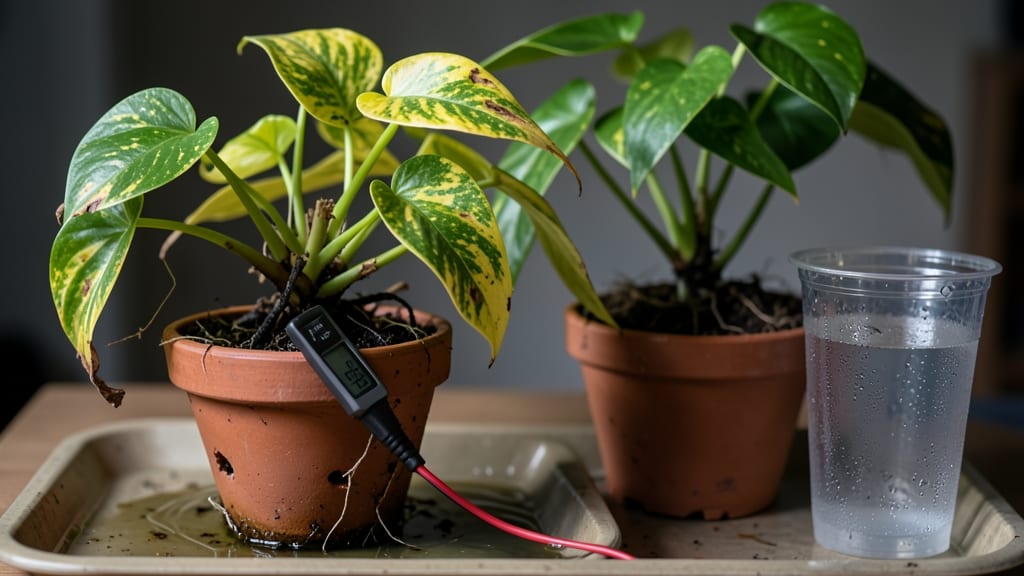
To know if you overwatered a plant, watch for yellowing leaves, mushy stems, wilting even when soil feels damp, fungal growth, or a foul odor from roots. Always check soil moisture and leaf texture before concluding.
Overwatering creates a suffocating environment for roots by blocking oxygen and encouraging harmful bacteria. 🌱 When soil stays soggy for too long, roots can't absorb nutrients properly, leading to stunted growth or sudden collapse.
I've learned the hard way that even plants labeled "low-maintenance" need well-draining soil and proper spacing between waterings. The key is testing soil moisture with your finger—if the top inch feels damp, hold off on watering.
Leaf symptoms often appear before root damage becomes visible. Drooping leaves that don't perk up after a few hours, yellowing between veins, or blackened spots all suggest excess moisture. 💧 For example, ferns may develop crispy brown edges while succulents turn translucent and rubbery.
Always check the undersides of leaves for mold or mildew, which thrive in damp conditions. Remember that container plants dry out faster than in-ground varieties, so their watering needs differ significantly.
💡 In This Article
- Root Rot and Soil Conditions from Overwatering
- Leaf and Stem Symptoms to Identify Overwatered Plants
Root rot and soil conditions from overwatering
When you overwater, the soil becomes waterlogged, creating an environment where roots can't access oxygen. Roots need oxygen to breathe just like we do—without it, they suffocate and begin to decay. This process starts within 24-48 hours of continuous saturation, especially in dense, clay-heavy soils that don't drain well.
The lack of oxygen triggers anaerobic bacteria, which thrive in these conditions and release toxins that further damage root cells. 🔥
Look closely at the soil surface: if it feels slick or leaves a puddle when pressed, that's a clear sign of excess moisture. The top 1-2 inches of soil should dry out between waterings for most plants.
In containers, check the weight—if it feels heavy like a sponge, it's likely overwatered. Unlike well-draining soil, which feels crumbly and dry at the surface, saturated soil stays cold and clammy for days after watering.
This suffocation leads to root rot, where roots turn brown or black and develop a mushy texture. In severe cases, you might notice a foul, sour smell emanating from the soil as anaerobic bacteria break down organic matter.
This is your plant's SOS signal—if ignored, the entire root system can collapse within 3-5 days, cutting off the plant's ability to absorb water and nutrients. 💫
Different plants have varying tolerance levels: ferns and calatheas show early signs of distress with yellowing leaves, while succulents may develop translucent, waterlogged stems. The key is observing how quickly your plant recovers after watering—if leaves stay droopy for more than 6-8 hours, that's a red flag.
Always use pots with drainage holes to prevent this cycle from starting.
To test soil moisture properly, insert your finger 1-2 inches deep. If it feels damp but not wet, most plants are fine. If it's soggy, withhold water immediately and let the soil dry out completely before watering again.
In extreme cases, you may need to repot the plant into fresh, well-draining soil to save it from root rot.