
How To
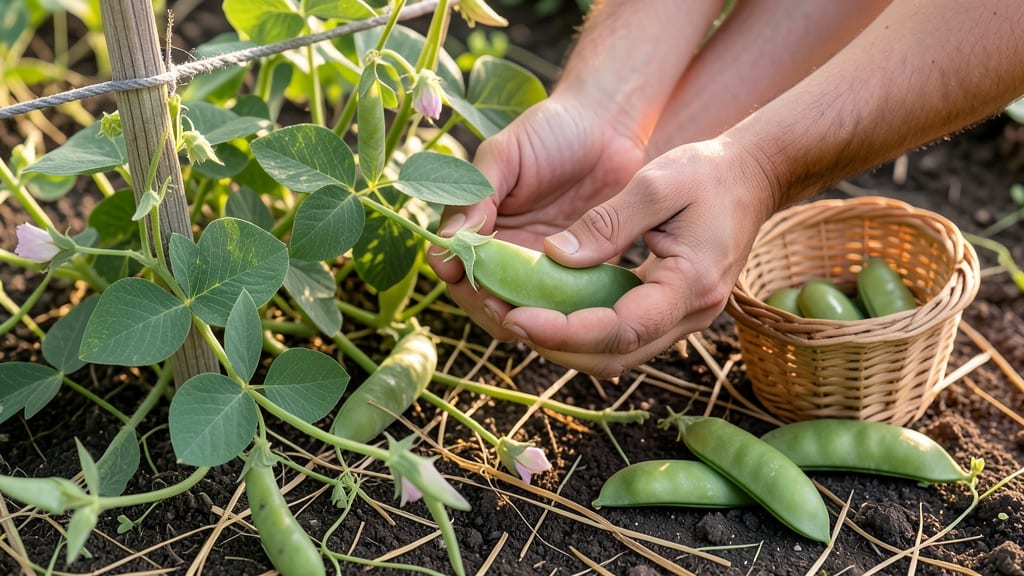
Knowing when peas are ready to pick means the difference between sweet, crisp pods and tough, mealy disappointments—so here’s how to tell them apart.
If you’ve ever snapped open a pea pod only to find the peas inside too large and the texture rubbery, you’re not alone. The key is catching them at the perfect moment, and it’s easier than you think.
All you need are three simple checks: size, color, and a little give when you squeeze.
Shelling peas, snap peas, and snow peas each have their own ideal ripeness cues, but the basics stay the same. A firm, bright green pod that’s slightly rounded and about 2-3 inches long is your target. Too small, and they’re still growing; too big, and they’ve passed their prime.
In this guide, I’ll walk you through the exact tests to use, how often to harvest for maximum yield, and what to do if you miss the window. By the end, you’ll never second-guess whether your peas are ready again.


The sugar-snap pea test: 3 visual & tactile signs your peas are perfectly ripe
There's nothing worse than biting into a pea pod that's tough, mealy, or past its prime. The secret to crisp, sweet peas lies in mastering the sugar-snap test—a combination of visual cues and tactile checks that tell you exactly when to harvest.
I've learned the hard way that waiting just one extra day can turn perfect pods into rubbery disappointments. Let's break down the three key signs that guarantee your peas are at their peak.
First, let's talk about the color of the pod. Perfectly ripe sugar-snap peas should be a vibrant, glossy green. If you see any yellowing or brown spots, that's your cue to pick them immediately—they're either overripe or starting to spoil.
I once ignored a few pods that were turning yellow, and by the time I noticed, they were tough and bitter. The color test is your first line of defense against poor flavor.
Next, we move to the size of the pod. For sugar-snap peas, you're looking for pods that are about 2.5 to 3 inches long. If they're smaller, they're still developing, and if they're larger, they've likely passed their prime.
I measure mine against my thumb for a quick check—if the pod reaches from my thumb joint to the tip, it's ready. This simple trick saves me from guessing and ensures I harvest at the perfect moment.
Here's where things get interesting: the snap test. This is the tactile clue that separates good harvesters from great ones. Hold a pod between your thumb and forefinger and give it a gentle squeeze. If it snaps cleanly with a satisfying crack, you've got a winner.
If it bends or feels mushy, it's either underripe or overripe. I always do this test on at least three pods from different parts of the plant to get an accurate read.
| Pea Type | Color | Size | Texture | Sound |
|---|---|---|---|---|
| Sugar-Snap Peas | Bright green, glossy | 2.5-3 inches | Firm, crisp | Clean snap |
| Shelling Peas | Vibrant green | 1.5-2 inches | Plump, firm | Seeds rattle |
| Snow Peas | Bright green, flat pods | 3-4 inches | Crisp, tender | Silent, flexible |
Now, let's talk about shelling peas, which have different ripeness cues. These should be harvested when the pods are about 1.5 to 2 inches long and the peas inside can be seen clearly through the pod.
The key here is to pick them when the peas inside are plump but still small—if they're too large, the pods become tough. I always give shelling peas a little shake; if I hear the peas rattling inside, they're ready.
For snow peas, the rules change again. These flat pods should be harvested when they're about 3 to 4 inches long and still completely flat. Unlike sugar-snaps, they shouldn't snap—they should bend slightly without resistance. I focus on the bright green color and the fact that they're still tender.
If they start to thicken or develop a slight curve, they've passed their prime. Snow peas are delicate, so I harvest them more frequently to keep up with their rapid growth.
One common mistake I see gardeners make is waiting too long to harvest. Peas continue to grow even after they're ripe, and that growth turns them tough and stringy. Another mistake is harvesting at the wrong time of day.
Peas are most crisp and sweet in the morning, so that's when I do my picking. Waiting until afternoon can mean softer, less flavorful pods. I've also learned that regular harvesting encourages more production—if I let pods go to seed, the plant stops making new ones.
Here's a pro tip: Harvest every 2-3 days for sugar-snap and snow peas, and every 3-4 days for shelling peas. This keeps the plants producing and ensures you always get the best flavor.
I set a reminder on my phone to check my pea plants regularly, especially during peak growing season. It's amazing how much difference this makes in the quality of your harvest. The more consistent you are, the sweeter and crisper your peas will be.
Finally, don't forget to check the entire plant. Peas often ripen unevenly, so I always do a thorough inspection from top to bottom. I look for the brightest green pods, the ones that feel firmest, and the ones that pass the snap test.
By focusing on these three key signs—color, size, and texture—I've never had a bad batch of peas again. It's all about paying attention to the details that make the difference between good and great.
Pea size & growth stage guide: exact measurements by variety for optimal harvest
Knowing the exact pea size and growth stage for your variety is the secret to harvesting crisp, tender pods every time. Each pea type—shelling peas, snap peas, and snow peas—has its own ideal measurements.
Miss the window, and you’ll end up with tough, fibrous pods or shrunken peas. Let’s break down the precise harvest measurements and how climate affects timing.
Peas thrive in cool weather, but even slight temperature shifts can delay or speed up growth. In cooler climates (USDA Zones 3-5), peas mature faster—sometimes by 10-15 days—while warmer zones (6-8) may extend the growth cycle.
Always adjust your expectations based on your local last frost date and average spring temperatures.
Here’s your pea size chart by variety, including the exact length measurements and growth stage timelines to watch for:
| Variety | Ideal Pod Size | Growth Stage | Days to Harvest | Climate Note |
|---|---|---|---|---|
| Shelling Peas (e.g., 'Lincoln', 'Oregon Sugar Pod') | 1.5–2 inches | Pods plump, peas inside not filling entire pod | 60–70 days | Faster in cool springs; slower in heat |
| Snap Peas (e.g., 'Sugar Snap', 'Super Sugar Snap') | 2.5–3 inches | Pods crisp, snap when bent, seeds small | 65–75 days | Heat reduces crispness; harvest early |
| Snow Peas (e.g., 'Oregon Sugar Pod', 'Mammoth Melting Sugar') | 3–4 inches | Flat pods, no peas inside, bright green | 60–70 days | Overripe if pods yellow; pick daily |
For shelling peas, the key is harvesting when the pod is plump but not bulging. If the peas inside are already touching, the pod will toughen quickly.
Use a ruler or caliper for precision—aim for 1.5–2 inches. In warmer climates, these peas may mature 5–7 days earlier, so monitor closely.
With snap peas, the crisp snap is your best indicator. Hold a pod between your fingers and gently bend it—if it snaps cleanly, it’s ready. Overripe snap peas lose their signature crunch and become fibrous.
In cooler regions, you can extend harvest by 1–2 weeks by planting succession crops every 2 weeks.
Snow peas are the trickiest—they must be flat and bright green, with no peas forming inside. If you see even a tiny pea, the pod is past its prime.
In hotter zones, snow peas may bolt (flower prematurely), so provide shade cloth if temperatures exceed 80°F. Always pick in the morning for the freshest flavor.
Pro tip: Use a small notebook to track your pea variety’s growth stages. Note the first day of flowering and pod appearance—this helps you predict future harvest windows.
For continuous yields, plant a mix of early (60 days), mid (70 days), and late (80 days) varieties.