
Picking
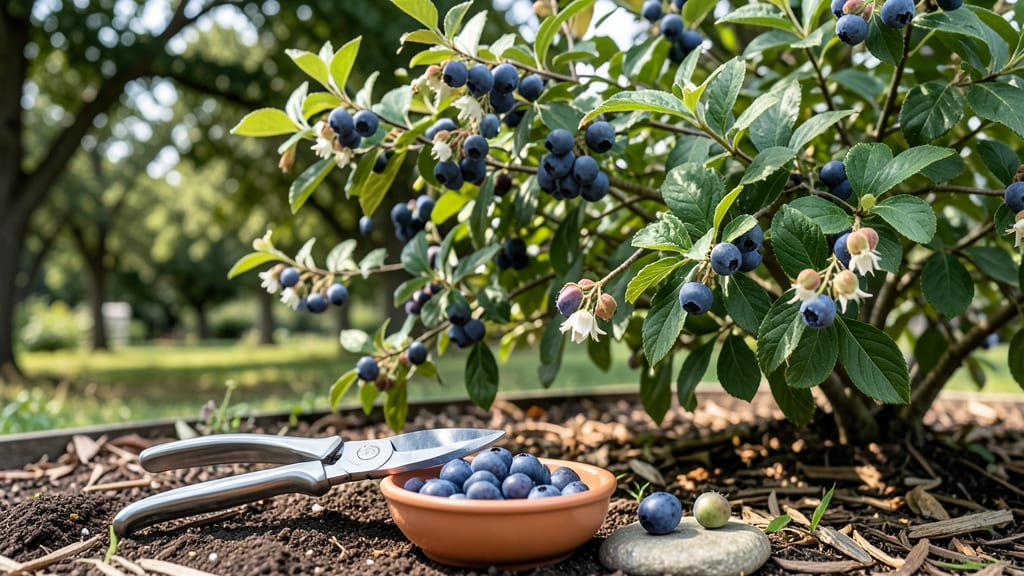
To know when blueberries are ready to pick, look for deep blue color (not red), berries that feel plump but yield slightly when gently squeezed, and stems that detach easily. Morning harvests yield the sweetest flavor.
Blueberries ripen quickly, so timing matters more than you might think. 🌿 The color shift from red to deep blue signals chlorophyll breakdown, which is when their natural sugars peak.
I've noticed that berries picked in the morning often have more vibrant flavor because they haven't been exposed to daytime heat yet. The slight give when squeezed indicates perfect ripeness—too firm means they need more time, while mushy berries are overripe.
Pro tip: Check for easy stem detachment as your final test. This simple technique saves you from picking underripe berries that won't develop proper flavor. Harvesting at the right stage ensures you get the sweetest, most flavorful berries for eating fresh, baking, or freezing.
💡 In This Article
- Blueberry Ripening Stages: Color, Size, and Firmness Science
- Best Tools and Techniques for Blueberry Harvesting
Blueberry ripening stages: color, size, and firmness science
The color transformation from red to deep blue is your first clue about ripeness, but it's actually a biochemical process called chlorophyll degradation. As blueberries mature, the chlorophyll that gives unripe berries their red hue breaks down, revealing the anthocyanins—those pigment molecules that create the signature deep blue color.
This shift typically occurs over 7-10 days depending on variety and climate conditions. The deeper the blue, the more developed the berry's natural sugars, which can reach concentrations of 8-12% by weight at peak ripeness.
What most people don't realize is that the firmness test reveals more than just texture—it indicates cell wall modification. As blueberries ripen, enzymes called pectinases break down pectin in the cell walls, making them slightly softer.
This is why a ripe berry will yield slightly when gently squeezed (about 0.5-1 mm of give). Overripe berries lose this structural integrity completely, becoming mushy—a sign the cell walls have degraded too much.
The firmness test is particularly important for varieties like 'Duke' or 'Bluecrop', which can go from perfect to overripe in just 24 hours under warm conditions.
Size plays a subtle but important role too. While all blueberries are small, fully ripe ones tend to be 10-15% larger than their unripe counterparts due to water uptake during maturation. This expansion is driven by osmotic pressure as sugars accumulate in the fruit.
I've noticed that berries from cooler climates often stay smaller but more flavorful, while those in warmer regions grow larger but may sacrifice some tartness. The key is to look for berries that are consistently sized within a cluster—this uniformity suggests they ripened together rather than sporadically.
Here's where many people go wrong: assuming red berries are unripe. While chlorophyll breakdown is the primary color change, some varieties like 'Jersey' develop a transient reddish hue before turning blue. The red color in these cases comes from different anthocyanin pigments that appear during early ripening stages.
To test ripeness in these varieties, combine the color check with the firmness test—if the berry yields slightly when squeezed and the stem detaches easily, it's ready regardless of color. 💫
Temperature also affects ripening rates dramatically. Blueberries ripen fastest at 75-85°F—above this range, enzymes work too quickly, leading to overripe berries in just 12-24 hours. Below 55°F, ripening slows significantly, which is why northern climates often have longer harvest windows.
This temperature sensitivity explains why morning harvests typically yield sweeter berries—the cooler night temperatures slow down the final stages of sugar accumulation, preserving that perfect balance of sweetness and tartness.
For the most accurate ripeness assessment, combine all three factors: color (deep blue), firmness (slight give), and stem detachment. This three-point system works because it accounts for both the visible and physical changes that occur during ripening.
When you see berries that meet all three criteria, you're looking at the sweet spot where sugar content peaks at 10-12% by weight—about double what you'd find in unripe berries.
This scientific approach ensures you're always picking berries at their flavor peak, whether you're harvesting for fresh eating, baking, or preserving.