
How To
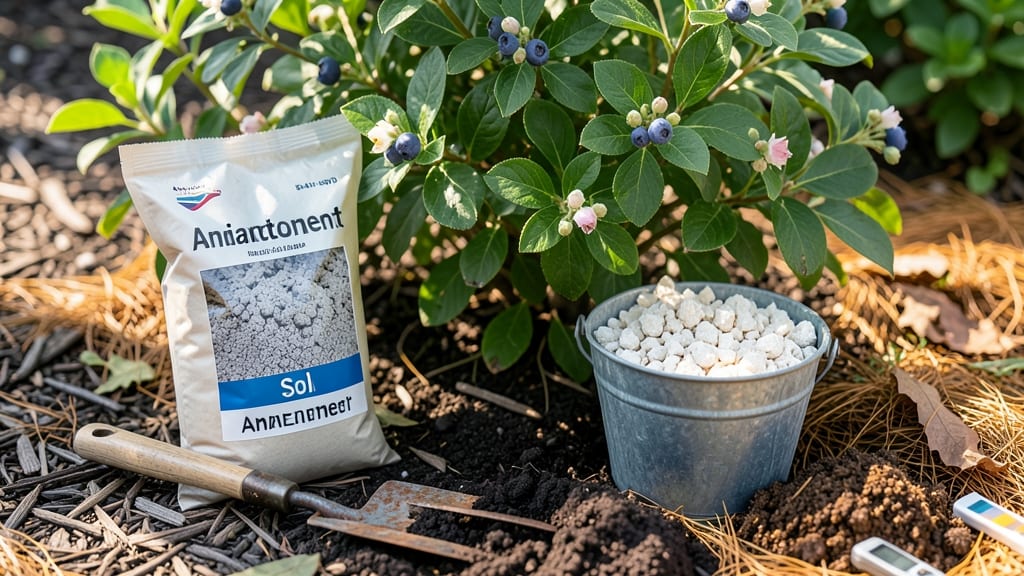
To lower acid in soil, apply agricultural lime (calcium carbonate) at 50-100 lbs per 1,000 sq ft, based on your soil's current pH and target level. Always test soil first, spread lime evenly, and water it in thoroughly. For best results, reapply annually if needed to maintain healthy plant growth.
Soil acidity affects nutrient availability, and lime works by neutralizing excess hydrogen ions (H⁺) that make soil too acidic. 🔥 The right type of lime matters—calcitic lime adds calcium, while dolomitic lime also includes magnesium, which some plants need.
I recommend testing soil every 3-6 months after application to track progress, as organic matter and rainfall can slow down pH changes.
Before applying lime, conduct a soil test to determine your exact pH level and lime requirement. Most garden centers sell affordable DIY test kits, but lab analysis provides more precise results.
Once you know your needs, broadcast lime evenly across the soil surface using a spreader, then water it in to help it dissolve and penetrate deeper into the soil profile.
💡 In This Article
- How Lime Adjusts Soil pH Chemistry
- Step-by-Step Lime Application Guide for Acidic Gardens
How lime adjusts soil pH chemistry
Agricultural lime (calcium carbonate, CaCO₃) works by chemically neutralizing acidic hydrogen ions (H⁺) in the soil. When lime dissolves in water, it releases calcium (Ca²⁺) and carbonate (CO₃²⁻) ions. The carbonate ions then react with hydrogen ions to form bicarbonate (HCO₃⁻), effectively reducing acidity.
This reaction is most effective in soils with a pH below 6.5, where hydrogen ions are most abundant.
The speed of pH adjustment depends on your soil's buffering capacity—its ability to resist pH change. Sandy soils adjust faster (within 2-4 weeks) because they have fewer particles to bind with lime, while clay soils may take 3-6 months due to their higher cation exchange capacity.
Organic matter also plays a role: soils rich in compost or peat slow down pH changes because organic acids bind with lime, delaying neutralization.
Choosing between calcitic and dolomitic lime matters for plant nutrition. Calcitic lime (90-95% calcium carbonate) raises pH quickly but lacks magnesium. Dolomitic lime (30-40% magnesium carbonate) is better for magnesium-deficient soils, like those growing blueberries or tomatoes.
For example, a pH 5.0 soil might need 50 lbs of calcitic lime per 1,000 sq ft, but 60 lbs of dolomitic lime if magnesium is also required.
Rainfall impacts lime effectiveness too. Heavy rain (1 inch per week) can wash lime deeper into the soil, speeding up pH changes. In drought-prone areas, watering lime in thoroughly (about ½ inch) ensures it dissolves properly.
Always re-test soil 3-6 months after application—pH changes aren’t immediate, and some soils need multiple treatments to reach the ideal 6.0-7.0 range for most plants.
For visual learners, think of lime as a chemical sponge soaking up excess acid. The more acidic your soil, the more lime it’ll "drink up" before reaching equilibrium.
For instance, a pH 4.5 soil might need double the lime of a pH 5.5 soil to hit the same target pH of 6.5.
Pro tip: If your soil has high organic matter (like compost-heavy garden beds), consider pelletized lime)—it dissolves slower, releasing calcium over time for steady pH control. 🌱